
Fact-checked by the The Finance Tree editorial team
Quick Answer
To pay off debt on a single income, you need to build a zero-based budget, target high-interest balances first, and redirect every freed dollar toward debt. As of July 2025, the average American carries $6,329 in credit card debt. By cutting fixed expenses and applying a structured payoff method, one single mom eliminated $22,000 in 24 months on a $55,000 salary — no side hustle required.
Learning how to pay off debt on a single income is one of the most searched personal finance challenges in 2025 — and for good reason. Federal Reserve consumer credit data shows total revolving debt in the U.S. remains near historic highs, and single-income households carry a disproportionate burden with fewer financial safety nets. This guide walks you through the exact method one single mother used to eliminate $22,000 in debt over 24 months on a $55,000 annual salary — without picking up a second job.
Inflation, rising interest rates, and childcare costs have made 2025 especially tough for solo earners. Consumer Financial Protection Bureau data shows that single-parent households are more likely to carry high-interest debt and less likely to have a three-month emergency fund. The pressure is real — but the math is workable with the right system.
This guide is for anyone managing debt on one income: single parents, recently divorced individuals, or anyone who lost a second earner. By the end, you will have a replicable framework — the same one that turned a $55K salary into a debt-free finish line in two years.
Key Takeaways
- The average American credit card interest rate reached 21.59% APR in early 2025, according to Federal Reserve data — making high-interest payoff the highest-return “investment” available to most debtors.
- A household earning $55,000 per year takes home roughly $3,700–$3,900 per month after taxes, giving a realistic working budget that can support aggressive debt repayment with the right structure.
- The debt avalanche method saves more money in interest than the debt snowball, but either method works — the key is choosing one and sticking with it consistently for at least 12 months.
- Cutting just three recurring expenses — such as streaming subscriptions, unused gym memberships, and dining out — can free up $200–$400 per month, according to Bureau of Labor Statistics Consumer Expenditure data.
- Single parents may qualify for the Child Tax Credit (up to $2,000 per child) and the Earned Income Tax Credit, which together can generate a lump-sum tax refund that accelerates debt payoff significantly — learn more in our guide to the Child Tax Credit and how to qualify.
- Automating debt payments on payday reduces the risk of spending that money elsewhere, a behavioral strategy supported by CFPB research on debt management.
In This Guide
- Step 1: How Do I Figure Out Exactly How Much Debt I Owe and Where?
- Step 2: How Do I Build a Budget That Actually Works on One Income?
- Step 3: What Expenses Can I Cut Right Now to Free Up More Money for Debt?
- Step 4: Should I Use the Debt Avalanche or Debt Snowball to Pay Off Debt on a Single Income?
- Step 5: How Do I Use Tax Refunds and Windfalls to Pay Off Debt Faster?
- Step 6: How Do I Build an Emergency Fund While Paying Off Debt at the Same Time?
- Frequently Asked Questions
Step 1: How Do I Figure Out Exactly How Much Debt I Owe and Where?
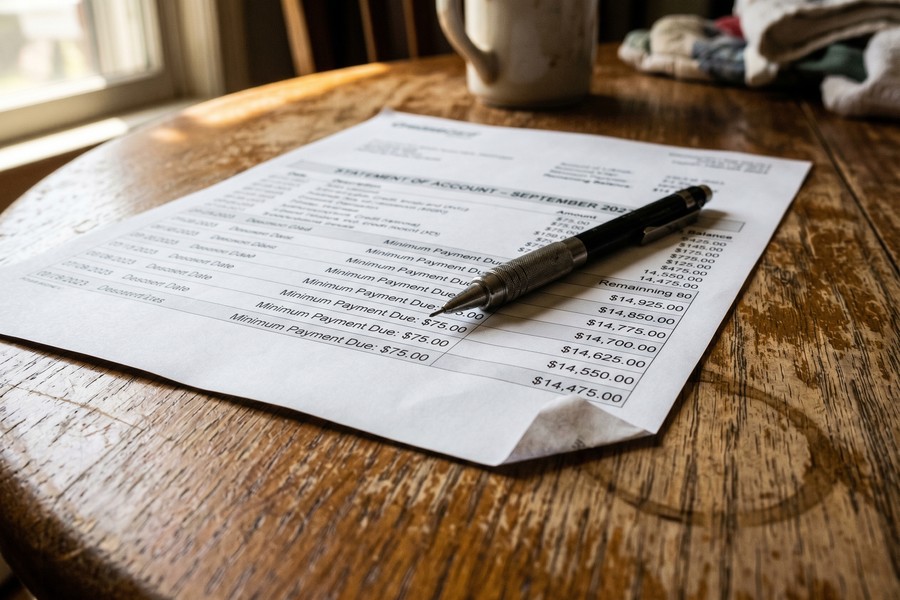
Start by pulling every debt you owe into one place before you make a single extra payment. You cannot build an effective payoff strategy without a clear, complete picture — and most people underestimate their total balance by 15–20% from memory alone.
How to Do This
Log into every creditor account and write down the creditor name, current balance, interest rate (APR), and minimum monthly payment. For debts you may have forgotten, pull your free credit report at AnnualCreditReport.com — the only federally authorized source for free reports from Equifax, Experian, and TransUnion. Our guide on how to check and read your credit report for free walks you through every line item.
Use a simple spreadsheet or a free app like Tiller Money or YNAB (You Need a Budget) to list each debt. Sort by interest rate (highest to lowest) and by balance (smallest to largest) — you will need both views in Step 4.
What to Watch Out For
Do not confuse your minimum payment with a payoff strategy. Paying only minimums on a $6,000 credit card balance at 21.59% APR takes over 17 years to eliminate and costs more than $7,000 in interest. Medical bills often have 0% interest if unpaid — always confirm the rate before prioritizing them over credit card debt.
One in three Americans does not know the interest rate on their highest-balance credit card, according to a CreditCards.com survey. Knowing your exact APR is the single most important number in any debt payoff plan.
Step 2: How Do I Build a Budget That Actually Works on One Income?
A zero-based budget — where every dollar of income is assigned a job before the month begins — is the most effective budgeting method for single-income debt payoff. It eliminates the “I don’t know where my money went” problem that derails most repayment attempts.
How to Do This
Start with your real take-home pay. On a $55,000 salary, most single filers in a mid-tax state take home approximately $3,750–$3,900 per month after federal taxes, state taxes, and any pre-tax deductions. Use SmartAsset’s paycheck calculator to get your precise number.
Divide that income using the 50/30/20 rule as a starting framework: 50% to needs (rent, utilities, groceries, childcare), 30% to wants, and 20% to debt and savings. In aggressive payoff mode, the goal is to flip those last two — directing 30–40% toward debt while cutting wants to 10–15%. For a step-by-step budget reset, see our guide on how to stop living paycheck to paycheck.
What to Watch Out For
Budgets fail when they are too rigid or ignore irregular expenses — car registration, back-to-school costs, or annual insurance premiums. Build these into monthly categories using sinking funds: set aside a fixed amount each month for predictable irregular costs. Our detailed breakdown of sinking funds and how to use them shows exactly how to set these up without disrupting your debt payments.
“The single most powerful thing a person on one income can do is give every dollar a name before the month starts. When money has a purpose, it stops disappearing.”
Set up a separate checking account labeled “Debt Payoff” and auto-transfer your designated payoff amount on payday — before you can spend it. This one behavioral tweak alone reduces missed extra payments by treating debt like a non-negotiable bill.
Step 3: What Expenses Can I Cut Right Now to Free Up More Money for Debt?
Cutting expenses is where the payoff acceleration happens on a single income. The goal is not to live miserably — it is to find $300–$600 in existing spending that can be redirected to debt without fundamentally changing your quality of life.
How to Do This
Start with a subscription audit. The average American spends $219 per month on subscription services, according to C+R Research — and most people underestimate this by half. Use a free tool like Rocket Money or Trim to identify every recurring charge. Our guide on how to audit and cancel forgotten subscriptions walks through this in under 30 minutes.
Next, attack your three largest variable expenses: groceries, dining out, and transportation. Meal planning alone can cut a grocery bill by $150–$200 per month for a family of two. Our meal planning on a budget guide includes a free weekly template designed for single parents.
What to Watch Out For
Do not cut your car insurance below adequate coverage to free up cash — liability gaps create catastrophic financial risk. Instead, shop rates annually. Switching insurers can save $400–$700 per year without reducing coverage, as we explain in our breakdown of how to save money on car insurance without lowering your coverage.
The Bureau of Labor Statistics Consumer Expenditure Survey shows that single-parent households spend an average of $7,316 per year on food — roughly $610 per month. Reducing that by 25% through planning and generic substitutions frees over $1,800 annually for debt repayment.
Below is a comparison of the most common expense-cutting strategies available to single-income earners, with realistic savings estimates based on BLS household spending averages.
| Expense Category | Average Monthly Spend | Realistic Reduction | Monthly Savings | Annual Impact on Debt |
|---|---|---|---|---|
| Subscriptions | $219 | Cancel 60% of services | $131 | $1,572 |
| Dining Out | $290 | Reduce by 50% | $145 | $1,740 |
| Groceries | $610 | Meal plan + generics, reduce 25% | $152 | $1,824 |
| Car Insurance | $175 | Shop and switch carriers | $50 | $600 |
| Impulse Shopping | $150 | 48-hour rule + unsubscribe from retail emails | $100 | $1,200 |
| Bank Fees | $30 | Switch to no-fee online bank | $30 | $360 |
Combined, these six categories alone can free up $608 per month — or $7,296 per year — to throw at debt. That is more than a third of what our example single mom needed to eliminate in Year One.
Step 4: Should I Use the Debt Avalanche or Debt Snowball to Pay Off Debt on a Single Income?
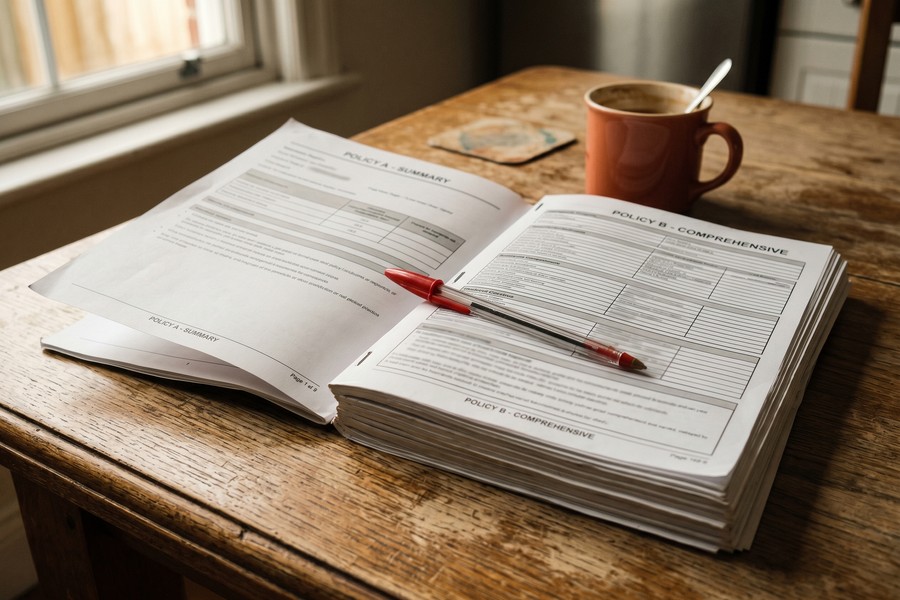
To pay off debt on a single income efficiently, use the debt avalanche method — pay minimums on all debts, then throw every extra dollar at the highest-interest balance first. This is mathematically optimal and typically saves hundreds to thousands in interest compared to other approaches.
How to Do This
List all your debts by APR from highest to lowest (from your Step 1 spreadsheet). Pay the minimums on everything. Direct all remaining debt-payoff budget to the highest-rate debt. When that balance hits zero, redirect its payment to the next highest-rate debt — this is called the avalanche roll.
The alternative is the debt snowball method, popularized by financial author Dave Ramsey: pay off smallest balances first for psychological wins. Research published by the Harvard Business Review found that people who target small balances first are more likely to stay motivated — but pay more in total interest. For a single income earner with limited margin, the avalanche saves more money, which matters more over 24 months.
What to Watch Out For
Do not stop making minimum payments on any account while targeting one aggressively. A single missed payment can trigger a penalty APR as high as 29.99% on credit cards, erase credit score progress, and result in late fees of up to $40 per occurrence. Automate all minimums without exception.
“The avalanche method is the mathematically correct approach for most consumers, but the best debt payoff method is the one you will actually stick with. If small wins keep you engaged, the snowball is worth the extra interest cost.”
If you are considering a balance transfer card or personal loan to consolidate high-interest debt, read our guide on whether using a personal loan to consolidate debt is worth it before applying. Balance transfer fees of 3–5% and introductory period expiration dates can backfire if you do not have a clear repayment plan in place.
Step 5: How Do I Use Tax Refunds and Windfalls to Pay Off Debt Faster?
Every lump-sum payment — a tax refund, a work bonus, a birthday gift, or a stimulus check — is a chance to compress your payoff timeline dramatically. On a single income, windfalls are the closest thing to a side hustle without the extra hours.
How to Do This
The average U.S. tax refund in 2024 was $3,167, according to IRS filing season statistics. Applied entirely to the highest-interest balance, a single refund of that size can eliminate a mid-size credit card account in one shot — accelerating payoff by four to six months.
Single parents should maximize their refund by claiming every eligible credit: the Child Tax Credit (up to $2,000 per qualifying child), the Child and Dependent Care Credit (up to $3,000 for one child), and the Earned Income Tax Credit (up to $4,213 for one child in tax year 2024). Use IRS Free File to file at no cost if your income is below $79,000.
What to Watch Out For
Resist the urge to “treat yourself” with a windfall before applying it to debt. A one-time $500 spending decision on a balance carrying 22% APR costs you approximately $110 in interest over the next year — and delays your payoff by weeks. Apply 100% of unexpected income to debt first, then reward yourself with a small, pre-planned amount (no more than 5% of the windfall).
Adjust your W-4 withholding so you get a smaller refund and instead receive an extra $100–$250 per month in your paycheck — then auto-apply that to debt monthly. This is mathematically superior to a once-a-year lump sum because it reduces interest accrual faster throughout the year.

Step 6: How Do I Build an Emergency Fund While Paying Off Debt at the Same Time?
Build a $1,000 starter emergency fund first — before aggressively attacking debt. This prevents a single unexpected car repair or medical bill from forcing you back onto credit cards, which undoes months of payoff progress in a single transaction.
How to Do This
Park your starter emergency fund in a high-yield savings account (HYSA). As of July 2025, the best HYSAs from online banks like SoFi, Marcus by Goldman Sachs, and Ally Bank are offering 4.50–4.75% APY — significantly better than a traditional savings account’s 0.46% national average. The interest earned offsets some of the cost of pausing aggressive debt payoff temporarily.
Once your $1,000 buffer is in place, redirect everything to debt. After you have paid off 50% of your total balance, expand the emergency fund toward a full three-month expense cushion. For a single-income earner, three months of expenses on a $55K income is roughly $8,000–$10,000 — build toward this gradually as debt shrinks.
What to Watch Out For
Do not use a money market account or CD for your emergency fund — you need instant access without penalties. Locking emergency money into a 12-month CD to earn slightly more interest is a false economy. Liquidity is the point.
According to the Federal Reserve’s 2023 Report on the Economic Well-Being of U.S. Households, 37% of adults could not cover an unexpected $400 expense without borrowing or selling something. A $1,000 buffer puts you ahead of more than a third of American households immediately.
Frequently Asked Questions
Can I really pay off debt on a single income without a side hustle?
Yes — paying off debt on a single income without a side hustle is entirely achievable by systematically cutting expenses and applying a structured payoff method. Our example shows $22,000 eliminated in 24 months on $55,000 per year purely through budgeting, subscription cuts, windfall application, and the debt avalanche method. A side income accelerates the timeline, but it is not required if your spending is controlled.
How much extra should I be paying toward debt each month on a $55K salary?
On a $55,000 salary with take-home pay of roughly $3,800 per month, most single-income earners can realistically direct $400–$700 per month in extra payments above minimums after covering essentials and a modest emergency fund contribution. To hit $22,000 in 24 months, the monthly extra payment needed is approximately $916 — achievable if you combine expense cuts with windfall payments like tax refunds.
Is debt consolidation a good idea for single moms trying to pay off debt?
Debt consolidation can be effective if it lowers your interest rate — but only if you qualify for a rate below your current weighted average APR. A personal loan consolidating $15,000 at 12% instead of 22% saves approximately $1,500 per year in interest. However, consolidation requires discipline to avoid recharging the original credit cards. Read our full analysis of whether personal loan consolidation is worth it before applying.
What is the fastest way to pay off $20,000 in debt on one income?
The fastest method on one income combines three tactics simultaneously: use the debt avalanche (target highest APR first), apply all windfalls and tax refunds directly to debt, and cut at least two or three major recurring expenses to generate $300–$600 in monthly extra payments. At $700 per month in extra payments on a $20,000 balance at 20% APR, you can be debt-free in approximately 30–33 months, paying roughly $5,000 in interest instead of the 17+ years it would take paying minimums only.
Should I pause retirement contributions while paying off high-interest debt?
Pause optional retirement contributions only if your credit card APR exceeds the expected investment return — which, above 10%, is almost always true for high-interest debt. However, always contribute at least enough to capture your employer’s 401(k) match if one is offered — that is an immediate 50–100% return that no debt payoff strategy can beat. Suspend contributions above the match until high-interest debt is cleared.
How do I stay motivated to pay off debt as a single parent without burning out?
Track your progress visually — a simple debt payoff chart on the refrigerator works better than most apps for long-term motivation. Celebrate milestone reductions (25%, 50%, 75% paid off) with low-cost rewards that do not set back your budget. Financial accountability partners — a trusted friend or an online community like Reddit’s r/personalfinance — are also proven to improve follow-through rates on debt goals.
What happens to my credit score when I pay off debt?
Paying down revolving credit card debt almost always improves your credit score because it reduces your credit utilization ratio — the second most weighted factor in a FICO score calculation, accounting for 30% of your total score. Dropping utilization from 80% to below 30% can add 40–100 points over six to twelve months. Avoid closing old paid-off accounts immediately, as that can reduce your available credit and temporarily raise your utilization ratio on remaining accounts.
What if I fall behind on my debt payoff plan because of an emergency?
If an emergency derails your plan, use the $1,000 starter emergency fund rather than a credit card — that is exactly what it is for. After the emergency, rebuild the buffer first (two to four weeks of focused saving), then resume debt payments. A one-month pause does not erase two years of progress. The key is returning to the plan quickly rather than abandoning it.
Is the envelope budgeting method helpful for paying off debt on one income?
The envelope method works especially well for single-income households because it creates hard spending limits on variable categories like groceries and entertainment. Physically handling cash makes overspending feel more concrete than swiping a card. If you prefer digital, apps like YNAB replicate the envelope system electronically with real-time tracking. Our complete guide to using the envelope budgeting method to control overspending walks through setup step by step.
Can I use my tax refund to pay off debt even if I also need to fix my car?
Yes — prioritize the car repair first if the vehicle is essential for work, then apply the remainder directly to your highest-interest debt. A non-functional car threatens your income, which is the foundation of your entire payoff plan. If the repair cost exceeds your tax refund, use the starter emergency fund for the gap and rebuild that buffer before resuming extra debt payments.
Sources
- Federal Reserve — Consumer Credit (G.19 Release)
- Consumer Financial Protection Bureau — Consumer Credit Trends
- AnnualCreditReport.com — Free Credit Reports (Authorized by Federal Law)
- Bureau of Labor Statistics — Consumer Expenditure Survey
- Internal Revenue Service — Filing Season Statistics
- Federal Reserve — 2023 Report on the Economic Well-Being of U.S. Households
- Consumer Financial Protection Bureau — Debt Collection Resources
- CreditCards.com — Credit Card Debt Statistics
- IRS — Earned Income Tax Credit Income Limits and Maximum Credit Amounts
- Harvard Business Review — Research: The Best Strategy for Paying Off Credit Card Debt