
You’re standing in the grocery store on a Tuesday evening, cart half-full, with no real plan — and somehow you walk out having spent $200 on food that won’t make a single complete meal. Sound familiar? A solid meal planning budget is the one habit that can stop that cycle cold. It saves you money, cuts waste, and takes the daily “what’s for dinner?” stress off your plate entirely.
According to the U.S. Bureau of Labor Statistics Consumer Expenditure Survey, the average American household spends over $8,000 a year on food — including both groceries and dining out. A well-executed meal plan can cut that number significantly. In this article, you’ll learn practical strategies to plan meals around your budget, shop smarter, and feed your family well without financial stress.
Key Takeaways
- The average U.S. household spends over $8,000 annually on food — meal planning can reduce grocery bills by 25% or more.
- Planning just 5 meals per week (leaving flexibility for leftovers and one night out) is enough to see real savings.
- Buying proteins in bulk and freezing portions can cut your per-meal protein cost by up to 40%.
- Households that write a grocery list and stick to it spend an average of 23% less per trip than those who shop without one.
Why Meal Planning Actually Saves Money
Most food waste happens because we buy ingredients with vague intentions and no real plan. The USDA estimates that Americans waste up to 30-40% of the food supply — and a big chunk of that happens at the household level. Every wilted bag of spinach or forgotten chicken breast is money in the trash.
A meal planning budget works because it forces you to buy only what you’ll actually use. You enter the store with purpose. You leave with exactly what you need — and a much smaller receipt. It’s one of the highest-impact habits covered in our guide on how to create a monthly budget that actually works.
Setting a Realistic Weekly Food Budget
Before you plan a single meal, you need a number. The USDA’s monthly food plan reports publish cost estimates by family size and budget tier. A family of four can eat on a “thrifty” plan for roughly $900-$1,000 per month — that’s about $225-$250 per week.
How to Find Your Number
Start by checking your last two months of bank or credit card statements. Add up every grocery store and restaurant charge. That’s your baseline. Then decide what’s reasonable to cut — most families can trim 20-30% with intentional planning.
If you’re also working on reducing debt or building savings, keeping food costs lean frees up cash for other goals. Pairing a tight food budget with a strategy like the debt avalanche method can accelerate your financial progress significantly.
Core Meal Planning Budget Strategies
The most effective approach is to plan around what’s on sale and what’s already in your pantry. Check your store’s weekly circular before writing your menu — not after. This one shift alone can save $20-$40 per week for a typical family.
Build Meals Around Cheap Proteins
Protein is usually the most expensive part of any meal. Eggs, dried beans, canned tuna, and chicken thighs are among the most affordable options per gram of protein. Buying chicken thighs instead of breasts, for example, can cut your protein cost nearly in half.
Buying in bulk and freezing portions is a game-changer. A 10-pound bag of frozen chicken thighs or a large package of ground beef broken into meal-size portions gives you weeks of protein at a fraction of the per-unit cost. Label everything with the date so nothing gets forgotten.
Use a “Repeating Meal” Framework
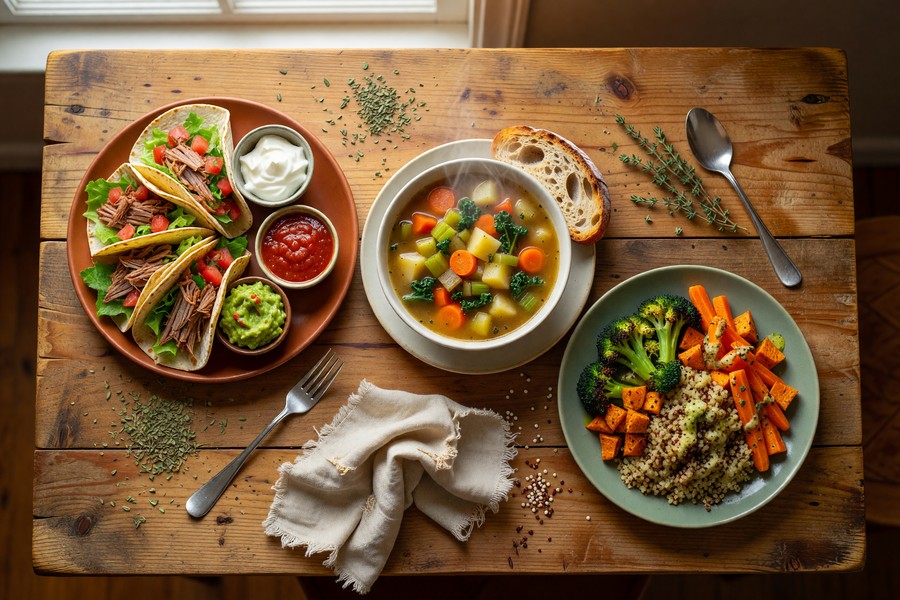
You don’t need 21 unique meals every week. Pick a simple structure — like Meatless Monday, Taco Tuesday, and Soup Sunday — and rotate recipes within each slot. This reduces decision fatigue and makes shopping lists nearly automatic over time.
Repeating meals also means you get better at making them. Efficiency goes up, waste goes down, and your family knows what to expect. That consistency is underrated as a budget tool.
Smart Grocery Shopping Habits That Reinforce Your Budget
A meal plan is only as good as your shopping execution. The biggest budget killer is the unplanned item — the $7 specialty cheese, the snack display near the checkout, the brand-name item when the store brand is identical. Impulse buying is the silent destroyer of grocery budgets.
If you struggle with impulse purchases at the store, our article on how to stop impulse buying and actually save money has practical tactics worth reading before your next shopping trip.
Shop With a List — And Honor It
Write your grocery list organized by store section: produce, proteins, dairy, pantry staples. This cuts down on backtracking and impulse grabs. Studies consistently show that shoppers with a list spend significantly less than those without one.
Never shop hungry. It’s cliché advice because it’s true. Hunger amplifies impulse purchases and causes you to buy more than you planned.
Store Brands and Unit Pricing
Store-brand products are manufactured by the same companies as name brands in many categories. Unit pricing — the cost per ounce or per pound displayed on the shelf tag — is the real comparison tool. Always use it instead of comparing sticker prices.
Frozen vegetables are often cheaper and just as nutritious as fresh. For cooked dishes like stir-fries, soups, and casseroles, frozen is almost always the smarter buy.
Reducing Food Waste to Stretch Every Dollar
The average American family throws away roughly $1,500 worth of food per year, according to research cited by waste reduction analysts. Cutting food waste is essentially free money. It requires no extra income — just better habits.
Plan at least one “use it up” meal each week. This is a meal built entirely from whatever’s left in the fridge and pantry — a frittata with odds and ends, a veggie soup, or fried rice with leftover proteins. It costs almost nothing and clears the fridge before your next shopping trip.
First In, First Out
When you unpack groceries, move older items to the front of the fridge and shelves. New items go to the back. This simple rotation system ensures older food gets used before it expires.
Keep a small whiteboard or notepad on the fridge listing items that need to be used soon. A visible reminder beats discovering a forgotten item that’s already gone bad.

Meal Prep and Batch Cooking for Maximum Efficiency
Batch cooking means making large quantities of food at once — usually on a weekend — so weeknight meals require minimal effort. Cook a big pot of rice, roast two sheet pans of vegetables, and prep three different proteins. Mix and match throughout the week.
This approach reduces the temptation to order takeout on a tired Wednesday night, which is where many family food budgets quietly bleed money. A $40 takeout order can replace a $10 home-cooked meal — that’s a $30 difference, dozens of times a year.
Freezer Meals as a Safety Net
Double any recipe you make and freeze half. Soups, stews, casseroles, and marinated meats all freeze well. Over a few weeks, you build a freezer inventory that acts as a budget cushion for chaotic weeks.
Label meals clearly with the date and contents. A well-stocked freezer is the best insurance against expensive last-minute food decisions. It also ties directly into having a strong financial emergency fund mindset — preparation now prevents costly scrambles later.
Frequently Asked Questions
How much does the average family save with meal planning?
Savings vary by household, but most families report reducing their grocery bills by 20-30% when they start meal planning consistently. For a family spending $1,000 per month on food, that’s $200-$300 back in the budget every single month. The key is sticking with the plan long enough to see cumulative results.
What’s the best meal planning budget strategy for beginners?
Start small. Plan just three to four dinners for the week and build a shopping list around those meals plus basics for breakfasts and lunches. You don’t need an elaborate system. A simple notepad or a free app like Mealime or AnyList is enough to get started.
Focus on mastering five to seven easy, inexpensive recipes before adding complexity. Consistency with simple meals beats elaborate plans that fall apart by Wednesday.
Is it cheaper to meal plan for a family or a single person?
Families often benefit more in absolute dollar terms because they’re buying in larger quantities where bulk discounts apply. However, single-person meal planning has its own advantages — smaller portions mean you can buy premium ingredients occasionally without breaking your budget. The meal planning budget principles are the same regardless of household size.
How do I handle picky eaters while staying on budget?
Build meals around one or two “safe” proteins or vegetables that everyone accepts, then add variety through sides and seasonings. Tacos, pasta dishes, and stir-fries are flexible enough to accommodate different preferences without making separate meals.
Involve kids in the planning process when possible. Children are more likely to eat food they helped choose or prepare. It also teaches them basic budgeting skills early — a win on two fronts.
Can I maintain a meal planning budget while eating healthy?
Absolutely — and eating healthy is often more affordable than people assume. Dried beans, lentils, oats, eggs, canned fish, and seasonal produce are among the most nutritious and affordable foods available. The processed convenience foods that often get cut from meal plans tend to be both expensive and less nutritious.
Think of a meal planning budget as an investment in health, not a sacrifice. You’re spending less and eating better at the same time. That combination is hard to beat.