
Key Takeaways
- A will is the foundation of any estate plan — without one, your state’s intestacy laws decide who gets your assets, which may not match your wishes and often creates unnecessary conflict and cost for your family.
- Probate — the court-supervised process of distributing a deceased person’s estate — is public, slow, and expensive. Assets held in trusts, joint tenancy, or with named beneficiaries bypass probate entirely.
- Beneficiary designations on retirement accounts, life insurance, and bank accounts override your will. Keeping them current is one of the most important and most neglected estate planning tasks.
- Federal estate tax only affects very large estates (above $13.61 million per person in 2026), but state-level estate and inheritance taxes kick in at much lower thresholds in some states — making state-specific planning essential.
Table of Contents
What Is an Estate?
Your estate is everything you own at the time of your death — bank accounts, investment accounts, retirement accounts, real estate, vehicles, business interests, personal property, and digital assets. It includes assets in your name alone, your share of jointly owned assets, and assets you control through certain trust arrangements. When you die, your estate must be administered: debts paid, taxes settled, and assets distributed to the people or organizations you’ve designated.
How that administration happens — and how much it costs and how long it takes — depends almost entirely on the planning you did (or didn’t do) before death. Families with proper estate plans typically transfer wealth smoothly, privately, and at relatively low cost. Families without them often face probate court proceedings that can take 12–24 months, cost 3–8% of the estate’s gross value in legal and administrative fees, and play out as a matter of public record. The CFPB’s estate planning guidance outlines the core documents every adult should have.
⚡ Pro Tip
Log into every retirement account, life insurance policy, and bank account you own right now and check the beneficiary designations. This takes 20 minutes and may be the single most impactful estate planning action you can take today. A beneficiary designation that names an ex-spouse, a deceased parent, or simply has no living beneficiary listed can override even a carefully drafted will — and create a legal mess that costs your family time and money to untangle.
Wills: The Foundation You Can’t Skip
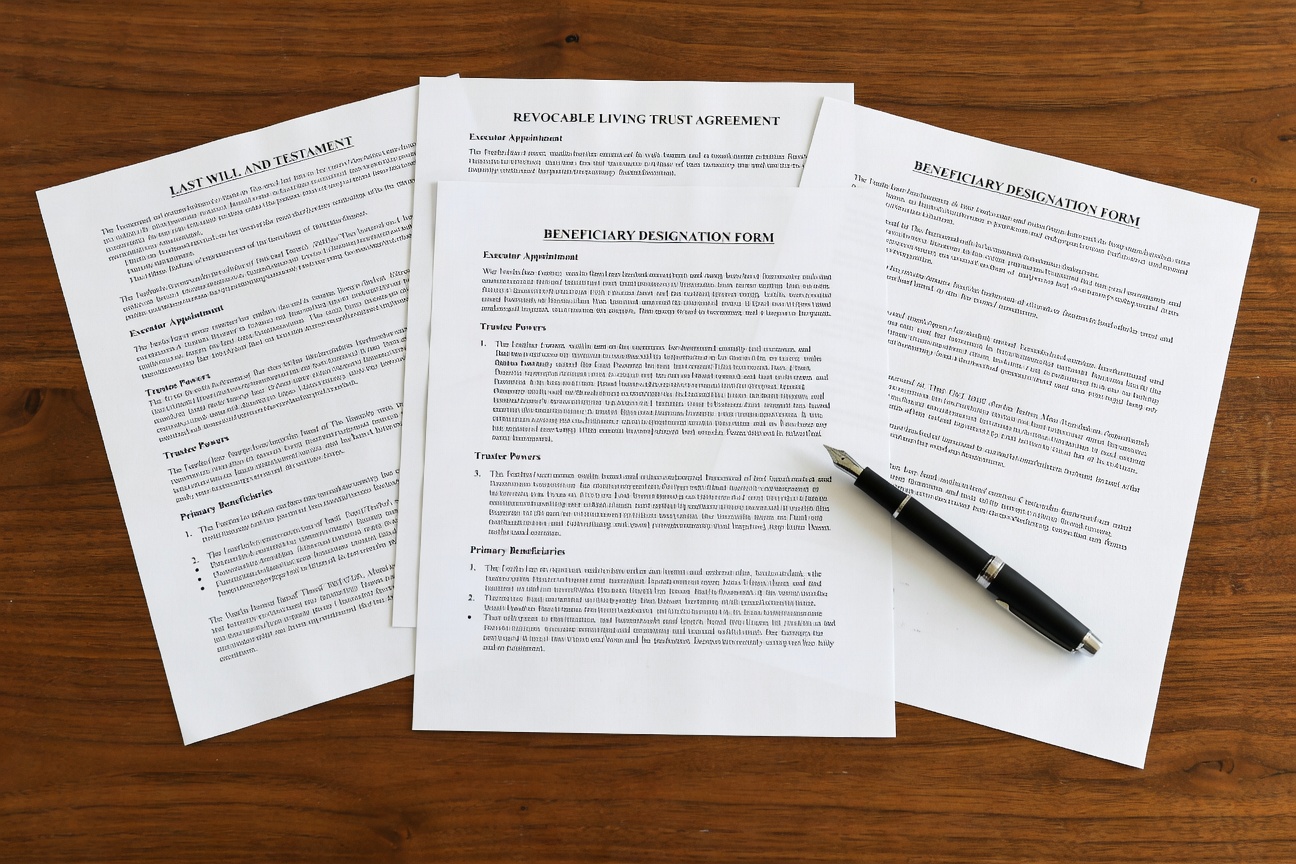
A will — formally a Last Will and Testament — is the legal document that expresses your wishes for how your assets should be distributed after death. It also names your executor (the person responsible for carrying out the will’s instructions), and critically for parents, names a guardian for minor children. Without a valid will, you die “intestate” and your state’s intestacy laws govern the distribution of your estate. Those laws follow a fixed formula — typically spouse, then children, then parents, then siblings — that may not reflect your actual wishes at all.
Wills are not complicated documents for most people. An attorney can draft a basic will for a few hundred dollars; online services like Trust & Will or LegalZoom offer templates for less. The complexity and cost scale with the complexity of your situation — blended families, business interests, large estates, special needs beneficiaries all warrant more sophisticated drafting. But a simple will created this week is better than a perfect will you’ve been meaning to create for years. The key requirements: it must be in writing, signed by you, and witnessed by two adults who are not beneficiaries (in most states). Handwritten “holographic” wills are valid in some states but frequently contested.
Probate: What It Is and How to Avoid It
Probate is the court-supervised legal process of validating a will, settling debts, and distributing a deceased person’s estate. It’s not always avoidable, but it’s almost always worth structuring your estate to minimize it. Probate proceedings are public record — anyone can access them. They take time, typically 12 months minimum and often 18–24 months for complex estates. And they’re expensive — attorney fees, court costs, and executor fees can consume 3–8% of the gross estate value before a single dollar reaches beneficiaries.
Assets that bypass probate entirely: assets held in a revocable living trust, assets owned in joint tenancy with right of survivorship, retirement accounts with named beneficiaries (401k, IRA, 403b), life insurance with named beneficiaries, bank accounts designated as Payable on Death (POD), and investment accounts designated as Transfer on Death (TOD). Real estate can also be transferred outside probate in many states through beneficiary deeds. Structuring your assets to maximize these non-probate transfers is one of the highest-value estate planning moves available.
Trusts: When You Need One
A revocable living trust is the primary tool for avoiding probate while maintaining control of your assets during your lifetime. You create the trust, transfer assets into it, and serve as your own trustee — maintaining full control. At death, the successor trustee you’ve named distributes trust assets according to the trust’s terms, without court involvement. The trust is “revocable” meaning you can change or dissolve it at any time while you’re alive.
Trusts are particularly valuable for: people who own real estate in multiple states (avoiding multiple state probate proceedings), those with significant assets who want to keep their estate private, parents of minor children who want to control the timing and terms of distributions, blended family situations with complex inheritance priorities, and anyone with a disabled beneficiary who might lose government benefit eligibility from an outright inheritance. For most people with simpler situations — one state, modest assets, straightforward beneficiaries — a will with properly designated beneficiaries achieves the same practical result at lower cost. For financial planning that complements estate planning see our guide on protecting wealth from mismanagement.
| Document | Purpose | Goes Through Probate? | Who Needs It |
|---|---|---|---|
| Last Will & Testament | Directs asset distribution; names executor and guardian | Yes | Everyone, especially parents |
| Revocable Living Trust | Holds assets during life; transfers at death without probate | No | Those with significant assets or real estate in multiple states |
| Durable Power of Attorney | Authorizes someone to manage finances if incapacitated | N/A (lifetime use) | Everyone over 18 |
| Healthcare Directive / Living Will | Documents medical wishes if unable to communicate | N/A (lifetime use) | Everyone over 18 |
| Beneficiary Designations | Directs retirement accounts, insurance, POD accounts | No — overrides will | Anyone with retirement accounts or life insurance |
| Minimum estate plan: Will + Durable POA + Healthcare Directive + updated beneficiary designations. Add a trust when complexity or asset value warrants it. | |||
Beneficiary Designations: The Override That Matters Most
Here’s the piece of estate planning that most people get wrong: beneficiary designations on retirement accounts, life insurance policies, and bank accounts are legally binding contracts that override everything in your will. If your will says “leave everything to my wife” but your 401(k) still names your mother as beneficiary from when you set it up at 25, your mother gets the 401(k). Full stop. Courts won’t reinterpret a clear beneficiary designation because it conflicts with a will.
This matters especially in a few scenarios. Divorce: beneficiary designations don’t automatically update when you divorce — many states have laws that revoke ex-spouse designations at divorce, but not all, and federal law governs ERISA-covered retirement accounts regardless of state law. Death of a beneficiary: if your named beneficiary predeceases you and you haven’t updated the designation, the asset may go to the estate and through probate anyway. No beneficiary named: same result — the account falls into your estate and goes through probate. The fix is simple: review every beneficiary designation annually and after every major life event — marriage, divorce, birth of a child, death of a family member.

⚡ Pro Tip
If you have minor children, creating a will and naming a guardian is urgent — not something to put off for years. Without a named guardian in a valid will, a court decides who raises your children if both parents die. That court may choose someone you would never have chosen. A simple will done this weekend is infinitely better than a perfect estate plan you haven’t gotten around to yet.
Estate Tax vs. Inheritance Tax: What Your Family Actually Owes
Federal estate tax in 2026 applies only to estates above $13.61 million per person ($27.22 million for married couples with proper planning). The vast majority of Americans will never have a federal estate tax liability. However, the current exemption is scheduled to sunset at the end of 2025 under the Tax Cuts and Jobs Act provisions — unless Congress acts, the exemption will roughly halve to approximately $7 million per person. High-net-worth families should be actively planning around this potential change now.
State estate and inheritance taxes are a different matter. Twelve states plus Washington D.C. impose their own estate taxes, several with exemptions well below the federal threshold — Massachusetts and Oregon exempt only $1 million. Six states impose inheritance taxes on recipients (Iowa, Kentucky, Maryland, Nebraska, New Jersey, Pennsylvania). The rates, exemptions, and rules vary significantly by state. If you live in one of these states, or own real property there, your estate plan needs to account for state-level tax exposure specifically. The IRS estate and gift tax resources cover the federal rules, and your state’s department of revenue covers state-level rules.
Starting Your Estate Plan
The minimum estate plan every adult should have — regardless of age or asset level: a will naming your beneficiaries, executor, and (if applicable) guardian for minor children; a durable power of attorney naming someone to manage your finances if you become incapacitated; a healthcare directive documenting your medical wishes; and current beneficiary designations on all retirement accounts, life insurance, and financial accounts. This foundation can be created in a weekend with an attorney or a reputable online service.
For those with more complex situations — significant assets, business interests, real estate in multiple states, blended families, or disabled beneficiaries — working with an estate planning attorney is worth the investment. A well-drafted trust and coordinated estate plan often saves multiples of its cost in avoided probate fees, taxes, and family conflict. The best time to do this was years ago. The second best time is now.
References
- IRS (2026). “Estate and Gift Taxes.” irs.gov
- Consumer Financial Protection Bureau (2025). “Draft a Will.” consumerfinance.gov
- Investopedia (2025). “Estate Planning.” investopedia.com
- NerdWallet (2025). “Estate Planning Basics.” nerdwallet.com