
Key Takeaways
- A federal tax lien is the IRS’s legal claim against your property when you fail to pay a tax debt — it attaches to everything you own and can seriously damage your credit and ability to sell assets.
- A tax lien is not the same as a tax levy: a lien is a claim against your property; a levy is the actual seizure of assets. A lien can become a levy if you ignore it long enough.
- The IRS offers several resolution paths — installment agreements, offers in compromise, currently not collectible status — that can stop or release a lien if you act before the situation escalates.
- Acting quickly is critical: the longer a tax debt sits unpaid, the more penalties and interest compound, and the harder resolution becomes. Contacting the IRS or a tax professional as soon as you receive a notice is always the right first move.
Table of Contents
What Is a Federal Tax Lien?
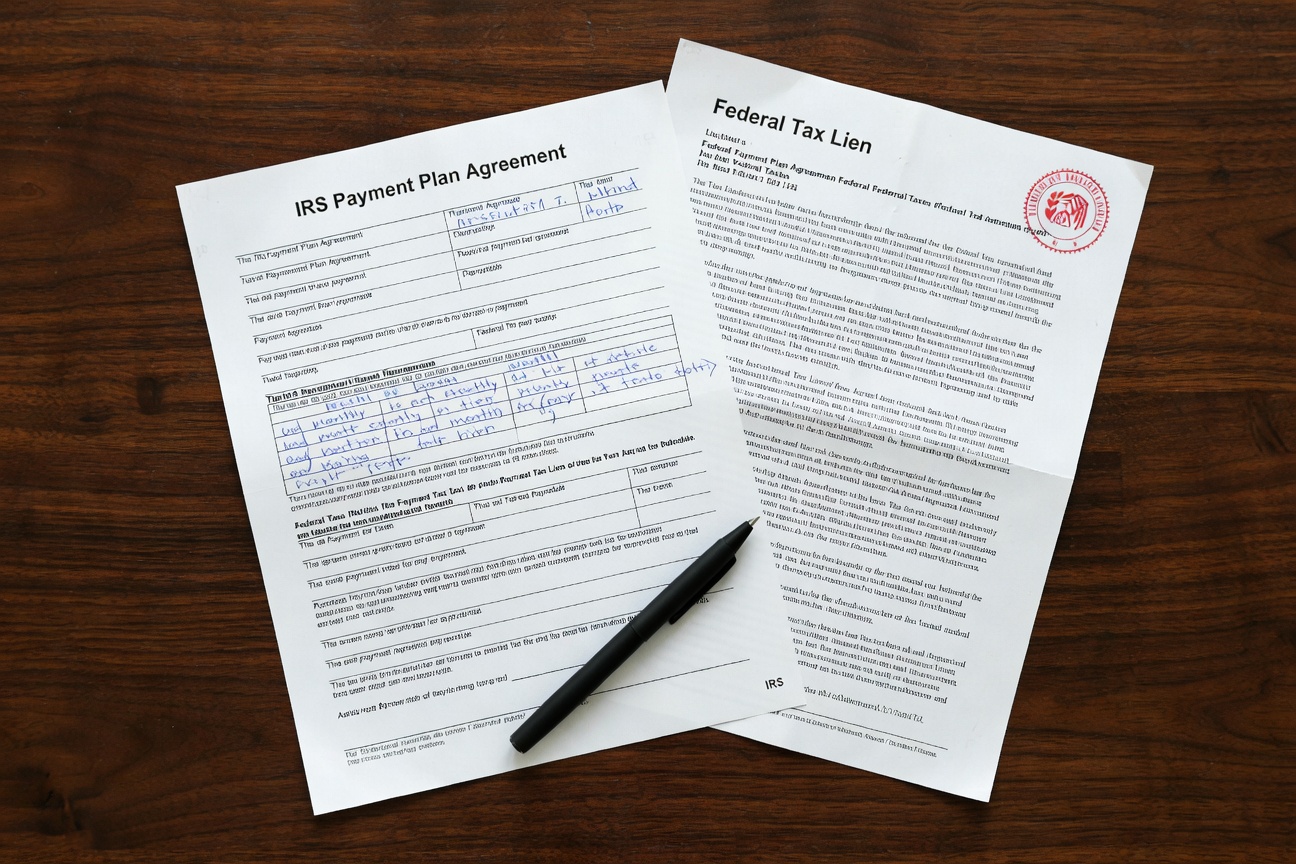
A federal tax lien is the government’s legal claim against your property when you neglect or fail to pay a tax debt. Let me be clear about what “legal claim” means in practice: it attaches to everything — your house, your car, your bank accounts, your investments, your business assets, and even future property you acquire. It’s not a freeze or seizure, but it establishes the IRS’s priority over your assets ahead of most other creditors.
The lien arises automatically once the IRS assesses a tax debt, sends a bill, and you fail to pay within the specified time. It exists whether or not the IRS files a public Notice of Federal Tax Lien. The public filing is what alerts creditors and appears on your credit report — making it visible to lenders, landlords, and anyone pulling a title search on your property. According to IRS guidance on federal tax liens, this is one of their primary collection tools for significant unpaid debts.
⚡ Pro Tip
If you receive any IRS notice, respond within the timeframe stated — even if you just acknowledge receipt and request more time. Ignoring IRS correspondence is the single fastest way to escalate from a manageable lien situation to a levy against your bank account or wages. The IRS is required by law to send multiple notices before levying, but those notices have strict deadlines. Missing them removes your right to appeal.
Tax Lien vs. Tax Levy: The Critical Difference
This distinction matters enormously and confuses most people. A lien is a legal claim — it encumbers your property but doesn’t take it. You can still live in your house, drive your car, and access your accounts. A levy is the actual seizure of assets. The IRS can levy your bank account (emptying it), garnish your wages (taking a portion of every paycheck), or seize and sell physical property.
A lien can become a levy if you ignore it. The IRS must send a Final Notice of Intent to Levy and a Notice of Your Right to a Hearing before actually levying — but if you miss those notices or don’t respond in time, the levy proceeds. The lien is a warning and a priority claim; the levy is the enforcement action. Treating a lien notice as urgent — not as something to deal with later — is essential to keeping it from escalating.
How a Tax Lien Gets Filed
The process follows a predictable sequence. First: the IRS assesses your tax liability (from a filed return, an audit, or a substitute return the IRS files on your behalf if you didn’t file). Second: the IRS sends a bill — typically a CP14 notice — demanding payment. Third: if you don’t pay, respond, or set up a payment arrangement within the notice deadline (usually 10 days after final demand), the lien arises automatically. Fourth: the IRS may file a Notice of Federal Tax Lien in public records, which is the step that affects your credit and appears in title searches.
That public filing triggers a cascading set of problems. Mortgage refinancing becomes nearly impossible. Selling real property requires the IRS to be paid from the proceeds first. Opening business credit lines becomes difficult. Some professional licenses can be affected. And the lien remains until the underlying tax debt is fully paid or otherwise resolved — it doesn’t have a time limit that runs while it’s publicly filed.
Consequences of a Tax Lien
The financial consequences of an unresolved federal tax lien are significant and multidimensional. Credit impact: a filed tax lien can lower your credit score substantially, making it harder and more expensive to borrow money for anything. Property sales: if you try to sell a home or other real estate with an IRS lien on it, the proceeds go to the IRS first — you may not be able to close the sale at all if the lien exceeds your equity. Business operations: lenders won’t extend credit to a business with a federal tax lien, and the lien attaches to business assets as well as personal assets for sole proprietors.
Perhaps most damaging: the underlying debt keeps growing. Federal tax debt accumulates interest (currently set quarterly based on the federal short-term rate plus 3%) and penalties (failure-to-pay penalty of 0.5% per month, up to 25% of the unpaid tax). A $20,000 tax debt ignored for two years can easily become $26,000–$28,000 by the time you address it. For related context on managing IRS obligations see our guide on strategic tax planning to reduce your liability.

⚡ Pro Tip
If you owe less than $50,000 in combined tax, penalties, and interest, you may qualify for a Streamlined Installment Agreement — which the IRS typically approves without requiring detailed financial disclosure. This is faster and less invasive than a standard installment agreement. Apply online at IRS.gov or call the IRS directly. Setting up an installment agreement before a lien is filed keeps the lien off your credit record entirely.
How to Resolve a Tax Lien
The most straightforward resolution is paying the debt in full — the IRS releases the lien within 30 days of payment. If full payment isn’t possible, you have several options, each with different implications for the lien itself. An installment agreement (payment plan) stops the IRS from levying while you’re making payments, but the lien typically remains until the balance is paid. An Offer in Compromise (OIC) — settling for less than the full amount owed — results in lien release upon acceptance and compliance. Currently Not Collectible status halts collection activity but leaves the lien in place.
The IRS payment plan portal allows you to set up installment agreements online for balances under $50,000. This is often the fastest path to stopping escalation. For larger balances or complex situations, working with an enrolled agent, CPA, or tax attorney who specializes in IRS representation is worth the professional fee — a good tax resolution professional often saves multiples of their fee through proper negotiation.
| Option | Best For | Lien Released? | Key Requirement |
|---|---|---|---|
| Pay in Full | Anyone who can afford it | Yes — within 30 days | Full balance payment |
| Installment Agreement | Those who need time to pay | No (but halts levy action) | Consistent monthly payments |
| Offer in Compromise | Those who can’t pay full amount | Yes — upon acceptance | Proven inability to pay full debt |
| Currently Not Collectible | Severe financial hardship | No (lien remains) | Demonstrated inability to pay |
| Bankruptcy | Last resort, older tax debts | Sometimes — depends on age of debt | Qualifies under bankruptcy code |
| Best first step: Contact the IRS directly or hire an enrolled agent or CPA specializing in tax resolution before any deadlines pass. | |||
Installment Agreements and Offers in Compromise
Installment agreements are the most commonly used resolution for taxpayers who can’t pay immediately. You make monthly payments toward the balance while penalties continue to accrue (though at a reduced rate while in compliance). The key advantage: the IRS won’t levy while you’re current on an installment agreement, giving you time to pay down the debt without losing assets. If you owe under $50,000 and can pay within 72 months, the Streamlined Installment Agreement requires minimal financial disclosure and can be set up online in minutes.
An Offer in Compromise is more complex but can be transformative for those who genuinely cannot pay the full amount. The IRS accepts OICs when the offered amount represents the most the IRS can reasonably expect to collect — based on your assets, income, expenses, and future earning ability. Acceptance rates hover around 30–40% of submitted offers. Working with a qualified tax professional dramatically improves your odds of submitting a realistic, properly documented offer. The IRS Offer in Compromise Pre-Qualifier tool can give you a preliminary sense of eligibility.
Your Action Plan
If you’ve received an IRS notice about a tax debt: read it carefully and note all deadlines. Do not ignore it. If the debt is legitimate and you can pay, pay it — even a partial payment before a deadline can sometimes prevent lien filing. If you can’t pay in full, contact the IRS before the deadline and request a payment plan. If you believe the debt is incorrect, file a formal dispute. If the situation is complex or the amount is large, hire a tax resolution professional before any deadlines pass.
The consistent pattern in tax lien situations is that people who act quickly have far more options and far better outcomes than those who wait. Every notice has a deadline, and every missed deadline removes options. Whatever your situation — act now, not later. For broader tax planning context, our guide on what celebrity tax disasters teach us about money illustrates the real cost of tax mismanagement at any income level.
References
- IRS (2026). “Understanding a Federal Tax Lien.” irs.gov
- IRS (2026). “Payment Plans — Installment Agreements.” irs.gov
- IRS (2026). “Offer in Compromise.” irs.gov
- Investopedia (2025). “Federal Tax Lien.” investopedia.com