
Key Takeaways
- The Mid-Atlantic region — Maryland, Pennsylvania, New Jersey, New York, Delaware, Virginia, and D.C. — is home to some of the most affordable and most expensive colleges in the country.
- In-state public universities in this region offer strong value, with average annual tuition ranging from $8,000 to $16,000 depending on the state.
- Regional reciprocity programs and aggressive merit aid at select private schools can dramatically reduce out-of-pocket costs for Mid-Atlantic students.
- The FAFSA deadline varies by state in this region — some Mid-Atlantic states award aid on a first-come, first-served basis, making early filing critical.
Table of Contents
- The Mid-Atlantic College Landscape: What You’re Working With
- Public Flagship Universities: Best Value by State
- Private Colleges in the Mid-Atlantic: Hidden Affordability
- State Aid Programs You Must Know About
- Side-by-Side Cost Comparison by State
- Aid Strategies That Work in the Mid-Atlantic
- How to Maximize Your Value in This Region
- References & Keep Reading
The Mid-Atlantic College Landscape: What You’re Working With
I’ve built my brand on zero-based budgeting and making every dollar count. And if there’s one thing that gets my budgeting instincts going, it’s the sheer range of college costs packed into the Mid-Atlantic region. Within a two-hour radius you can find schools charging $12,000 a year and schools charging $62,000 a year — for degrees that may produce nearly identical career outcomes in many fields.
The Mid-Atlantic covers Maryland, Pennsylvania, New Jersey, New York, Delaware, Virginia, and Washington D.C. It’s one of the most densely populated — and densely collegiate — regions in the country, with over 200 degree-granting institutions. That density is actually good news for students: competition between schools means more scholarship money on the table, more program options, and more opportunities to commute from home and cut costs dramatically.
According to the Bureau of Labor Statistics, the Mid-Atlantic region consistently posts some of the highest median earnings for college graduates in the country — which matters when you’re calculating whether the debt load is worth it. Understanding the total cost of college attendance in this region is essential before making any commitment.
Public Flagship Universities: Best Value by State
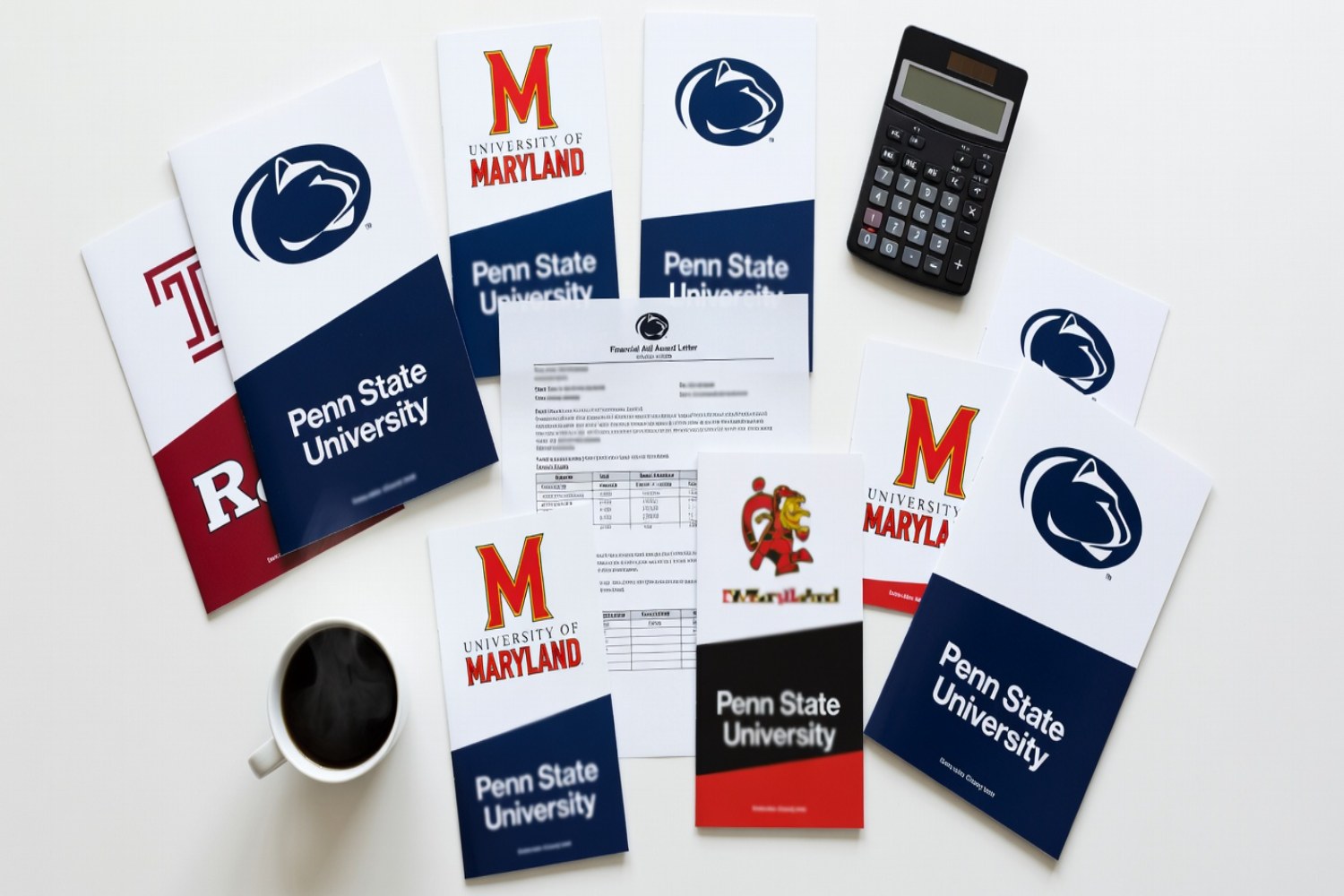
Public flagships offer the best combination of academic reputation, campus resources, and in-state affordability. Here’s what you’re looking at by state:
University of Maryland (College Park). One of the strongest public universities in the region. In-state tuition runs around $11,500/year; with room, board, and fees you’re at roughly $30,000 total COA. Strong merit scholarship programs — the President’s Scholarship and Banneker/Key scholarships cover full tuition for top applicants.
Penn State (University Park). In-state tuition sits around $18,500/year — higher than most Mid-Atlantic flagships, but Penn State’s massive alumni network and strong job placement in engineering, business, and communications often justifies the premium. Total COA runs about $36,000 in-state.
Rutgers University (New Brunswick). New Jersey’s flagship runs about $15,500 in-state tuition. With room and board the total COA is around $33,000. Rutgers has strong programs in pharmacy, engineering, and business, and the proximity to New York City creates internship and career opportunities that genuinely add career value.
SUNY Binghamton. One of the best college bargains in the country. In-state tuition is around $7,900/year — total COA around $26,000. Consistently ranked among top public universities nationally. If your student qualifies for SUNY and can access in-state rates, Binghamton is exceptional value.
University of Delaware. In-state runs about $14,500 tuition; out-of-state $36,000. The school offers a generous merit scholarship program for out-of-state students, making it worth applying even if you’re from Pennsylvania or Maryland.
University of Virginia. The most selective public flagship in the region. In-state total COA is around $32,000 — very competitive for the academic quality. UVA’s AccessUVA program meets 100% of demonstrated financial need for in-state students.
⚡ Pro Tip
If you live near a state border, check whether neighboring states have reciprocity agreements. The Academic Common Market and various bilateral agreements between Mid-Atlantic states can make attending an out-of-state public university at near-in-state rates possible — particularly for specialized programs not offered at your home state’s schools. This one research step can save tens of thousands of dollars over four years.
Private Colleges in the Mid-Atlantic: Hidden Affordability
The Mid-Atlantic is home to some of the most expensive private universities in the world — and some surprisingly affordable ones. Here’s the key insight: don’t rule out private schools based on sticker price alone.
Schools like Johns Hopkins ($62,000 sticker), Georgetown ($60,000), and NYU ($58,000) genuinely are expensive even after aid for most families. But many smaller private colleges in this region offer aggressive institutional grants that bring net prices down sharply. Dickinson College, Gettysburg College, Lafayette College, and Drew University all regularly offer merit scholarships of $20,000–$35,000 per year to strong applicants — making their net prices competitive with regional public options.
The Federal Student Aid net price calculator requirement means every school must publish a tool that estimates your actual cost. Use it for every private school on your list — you’ll be surprised how often the net price at a $55,000 sticker private school comes out below $35,000 for a middle-income family. Our full breakdown of in-state vs. out-of-state vs. private college costs explains exactly why this happens.

State Aid Programs You Must Know About
Each Mid-Atlantic state runs its own grant program, and the rules and deadlines vary significantly. Missing a deadline in some states means missing out on grants entirely — these are not forgiving.
Maryland — Office of Student Financial Assistance (OSFA). Maryland offers the Howard P. Rawlings Educational Excellence Award (need-based) and various merit programs. The deadline is March 1 — file FAFSA before this date or you lose eligibility.
Pennsylvania — PHEAA State Grant. One of the more generous state grant programs in the country. Maximum award is around $5,750/year for qualifying students. Awards are made on a first-come, first-served basis — the earlier you file FAFSA, the better.
New Jersey — NJ TAG (Tuition Aid Grant). Available to NJ residents attending NJ colleges. Maximum award is around $13,900/year for community college and up to $8,400 for four-year schools. Deadline is June 1, but funds run out — file as early as possible.
New York — TAP (Tuition Assistance Program). Awards up to $5,665/year for students at SUNY/CUNY schools. Income limits apply. File the NYS TAP application after completing FAFSA — it’s a separate form many students miss.
Virginia — Virginia Guaranteed Assistance Program (VGAP). Need-based program covering full tuition and fees for qualifying students at Virginia public colleges. Families with income under $50,000 should investigate this program carefully.
As the CFPB’s college financing guide emphasizes, state grant money is the most valuable aid available — it never has to be repaid. Prioritize completing FAFSA early enough to capture every state dollar available before applying for any loans.
Side-by-Side Cost Comparison by State
| State / School | In-State Tuition | Total COA | Notable Aid Program |
|---|---|---|---|
| Maryland (UMD) | $11,500 | $30,000 | Banneker/Key Scholarship |
| New York (SUNY Binghamton) | $7,900 | $26,000 | NYS TAP + Excelsior |
| New Jersey (Rutgers) | $15,500 | $33,000 | NJ TAG Grant |
| Pennsylvania (Penn State) | $18,500 | $36,000 | PHEAA State Grant |
| Virginia (UVA) | $14,800 | $32,000 | AccessUVA (100% need met) |
| Delaware (U of Delaware) | $14,500 | $33,500 | Merit awards for OOS |
| Best Value | SUNY Binghamton (NY) for overall COA; UVA for need-based aid generosity; UMD for merit scholarships | ||
Aid Strategies That Work in the Mid-Atlantic
The Mid-Atlantic’s density of schools creates real leverage for savvy students and families. Here’s how to use it.
Apply to schools across multiple states. Because the region is compact and schools compete for students across state lines, you can often play aid offers against each other. A strong applicant with an offer from Rutgers can use it to negotiate with University of Delaware or Dickinson. Schools know you have options.
File FAFSA on October 1 — not later. Several Mid-Atlantic states (New Jersey, Pennsylvania) allocate state grant funds on a first-come, first-served basis. Filing on October 1, the earliest possible date, is not optional if you want maximum aid access. Our guide to completing the FAFSA correctly walks through every step to avoid common errors that delay processing.
Look at commuter options seriously. In dense urban areas like the Philadelphia suburbs, Baltimore-Washington corridor, and New York metro, living at home and commuting can save $14,000–$18,000 per year in room and board. That’s $56,000–$72,000 over four years — enough to eliminate loan debt entirely at most in-state schools.
Consider community college transfer pathways. Every Mid-Atlantic state has structured transfer agreements between community colleges and public four-year universities. Two years at a community college (averaging $4,000–$6,000/year) followed by transfer can cut the total degree cost in half while earning the same diploma from the flagship university.
⚡ Pro Tip
The Mid-Atlantic’s competitive job market means that internship access during college often matters more than the specific school’s brand. When comparing schools, look beyond rankings to ask: Which school has the strongest employer relationships in my target field? Which offers the most co-op or internship placement support? A Rutgers graduate with three relevant internships will typically out-earn a Georgetown graduate with none — and carry far less debt.
How to Maximize Your Value in This Region
Here’s the framework I’d apply if I were advising a Mid-Atlantic family right now:
Step 1: Identify your in-state flagship and honors college options. Every state’s flagship has an honors college or program with smaller classes, better resources, and often additional merit scholarships. Apply specifically to the honors program — it changes the academic experience and the financial offer.
Step 2: Apply to at least three private colleges with known merit aid programs. Research schools with high “percentage of need met” and strong merit programs for your student’s academic profile. Dickinson, Gettysburg, Lafayette, Muhlenberg, and Goucher consistently offer generous merit awards to strong applicants.
Step 3: Calculate the true four-year net cost for each school. Use the net price calculator, add living expenses, factor in graduation rate, and project loan debt at graduation. A school that costs $5,000 more per year but has a 90% four-year graduation rate versus a 55% rate elsewhere is often the cheaper option.
Step 4: Negotiate with your top choice. Once offers arrive, appeal any aid package that feels insufficient. The CFPB recommends putting competing offers in writing and making a specific ask — this process, called a professional judgment appeal, works regularly. And once you’ve chosen a school, make sure you understand how to pay down student loans efficiently if you do carry any debt into graduation.
References
- U.S. Department of Education, Federal Student Aid. (2025). “Types of Aid.” StudentAid.gov
- Consumer Financial Protection Bureau. (2025). “Paying for College.” CFPB.gov
- U.S. Bureau of Labor Statistics. (2025). “Should I Go to College?” BLS.gov
Keep Reading: