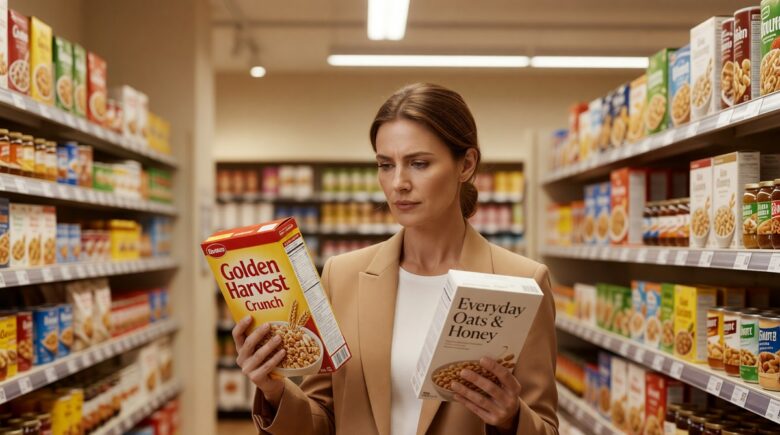
You’re standing in the grocery aisle, store-brand cereal in one hand and the name-brand box in the other. The price difference is nearly two dollars. You wonder: is there actually a difference, or are you just paying for the mascot? This is the core of the generic vs name brand savings debate — and it plays out dozens of times a week for the average American household.
According to the Consumer Reports analysis of store brands vs. name brands, shoppers can save an average of 25% or more by choosing generic products. But that number hides a more complicated story. Some generic swaps are no-brainers. Others will cost you more in the long run. This article breaks down exactly where the savings are real — and where they are not.
Key Takeaways
- Shoppers who buy store-brand groceries consistently save an average of 25–30% compared to name-brand equivalents.
- Generic over-the-counter medications contain the same FDA-regulated active ingredients as brand-name versions — at a fraction of the cost.
- Some categories — including certain tools, baby formula, and mattresses — may not deliver the same value or safety in generic form.
- Switching just 10 grocery items per week to store brands can save the average household $1,000 or more per year.
Why Generic Products Exist — and Who Makes Them
Most people assume generic means inferior. That assumption is mostly wrong. Many store-brand products are manufactured in the exact same facilities as the name-brand versions, just without the marketing budget attached.
Retailers like Costco, Walmart, and Kroger source their private-label goods from major manufacturers. The product inside the plain white box is often identical to what is in the flashy one next to it. You are largely paying for advertising, packaging, and brand equity — not a better product.
Generic vs Name Brand Savings: Where Groceries Win Big
The grocery store is where most households can capture the largest generic vs name brand savings. Staple items are where the opportunity is greatest.
High-Value Swaps in the Grocery Aisle
The following categories almost always deliver equivalent quality at a lower price:
- Dry goods: flour, sugar, rice, oats, and pasta
- Canned goods: tomatoes, beans, corn, and soups
- Dairy: milk, butter, and shredded cheese
- Frozen vegetables and basic frozen meals
- Condiments: ketchup, mustard, and mayonnaise
These products have minimal variation between brands. Taste tests conducted by Consumer Reports consistently show that most people cannot tell the difference in blind comparisons.
Where Name Brands Still Win at the Store
Not every grocery swap pays off. Some name-brand products have genuine formulation differences. Specialty sauces, craft beverages, and certain snack foods often have proprietary recipes that generics simply do not replicate well. If a specific product is central to a meal you make regularly, the name brand may be worth it.
Medications and Health Products: A Clear Win for Generic
This is arguably the most important category in the entire generic vs name brand savings conversation. Generic medications are required by the FDA to contain the same active ingredients, dosage, and strength as their brand-name counterparts.
Ibuprofen is ibuprofen. Diphenhydramine is diphenhydramine. Whether it says Advil or CVS Health on the label, the molecule doing the work is identical. You could easily pay three times more for a name-brand OTC medication with zero additional benefit.
The same logic applies to generic prescription drugs. According to the FDA, generic drugs cost 80–85% less than brand-name prescriptions on average. If your prescriptions are a significant expense, talking to your doctor about generic alternatives is one of the highest-ROI conversations you can have. You might also want to review our guide on how to negotiate medical bills and lower your healthcare costs for additional savings strategies.
Household and Cleaning Products: Usually Worth the Switch
Dish soap, laundry detergent, trash bags, and all-purpose cleaners are strong candidates for generic swaps. The active cleaning agents in most of these products are commodity chemicals. Generic versions clean just as effectively at a much lower price.
Where to Be Careful
Garbage bags are a nuanced exception. A cheaper bag that tears mid-haul costs you time, mess, and frustration — potentially requiring two bags instead of one. A slight step up in quality here often makes financial sense. Test a small pack before committing to a bulk purchase.
Paper products like toilet paper and paper towels also vary meaningfully in quality. The savings are real, but comfort and durability matter here. A middle-tier store brand is often the sweet spot — not the cheapest option, not the premium name brand.
Where Generic vs Name Brand Savings Are Not Real
Some categories genuinely do not deliver equal value in generic form. Knowing these exceptions protects you from false economy.
Electronics and Tech Accessories
Generic phone chargers, cables, and power adapters are one of the most common areas where cheap costs more. Low-quality chargers can damage batteries, charge slowly, or fail quickly. In some cases, they pose a safety risk. Spending a few extra dollars on a reputable brand here is a legitimate financial decision.
Tools and Hardware
A hand tool you will use once is a fine candidate for a generic. A drill, saw, or wrench you rely on regularly is not. Off-brand tools often wear faster, break under stress, or lack warranty support. The total cost of ownership over time often favors a durable name-brand option.
Baby Formula and Infant Products
The FDA strictly regulates infant formula, and store-brand formulas meet the same nutritional standards. In this case, generic is actually a safe, significant money-saver — savings of up to 50% are common. The exception is specialty formulas for infants with specific medical needs, where your pediatrician’s guidance should take priority.

How to Build Generic Buying Into Your Budget
The biggest mistake people make is trying to switch everything at once. A better approach is methodical. Start with the highest-frequency, lowest-risk categories: dry goods, canned food, cleaning supplies, and OTC medications.
Track what you spend monthly. If you are not already working from a spending plan, learning how to create a monthly budget that actually works will help you see exactly where generic swaps move the needle. Even modest changes compound quickly. Saving $20 a week on groceries adds up to over $1,000 a year — money that can go toward debt payoff, savings, or investing.
Impulse purchases are where even the best generic strategy breaks down. Sticking to a list is critical. If you find yourself grabbing name brands out of habit rather than need, our guide on how to stop impulse buying and actually save money is worth a read. And if you are looking for a place to park those grocery savings, check out the best high-yield savings accounts for 2026 to make every saved dollar work harder.
Frequently Asked Questions
Are generic medications truly as effective as name-brand drugs?
Yes, in the vast majority of cases. The FDA requires generic drugs to contain the same active ingredient, strength, dosage form, and route of administration as brand-name drugs. They must also meet the same standards for quality, purity, and potency. The inactive ingredients (fillers, dyes) may differ, which occasionally matters for people with specific allergies — but the therapeutic effect is equivalent.
Which grocery items should I never buy generic?
This varies by personal preference, but common exceptions include specialty sauces, flavored snacks, and beverages where the specific recipe is the product. Some people also prefer name-brand peanut butter or salad dressing for taste reasons. The key is to test before committing to a large quantity — your palate is the final judge.
How much can I realistically save by switching to generics?
The average American household spends around $5,000 to $6,000 per year on groceries. Switching 50% of purchases to store brands at an average savings of 25–30% could realistically save $600 to $900 per year on groceries alone. Add in OTC medications and household supplies, and the total annual savings can easily exceed $1,500 for a family of four.
Is store-brand food regulated differently than name-brand food?
No. All food sold in the United States — regardless of brand — must comply with FDA food safety regulations. Store-brand products sold by major retailers go through the same food safety standards as their name-brand counterparts. In many cases, they are made in the same facilities by the same manufacturers under a private-label agreement.
Does buying generic affect product quality over time?
For consumables like food, cleaning products, and medications, quality is consistent and typically comparable to name brands. For durable goods like electronics, tools, and appliances, quality can vary widely. In those categories, reading independent reviews and checking warranty terms matters more than the brand name alone. The smart approach is to evaluate durables individually rather than applying a blanket generic rule.
Sources
- Consumer Reports — Store Brands vs. Name Brands
- U.S. Food and Drug Administration — Generic Drug Facts
- U.S. Food and Drug Administration — Infant Formula and the FDA
- U.S. Bureau of Labor Statistics — Consumer Expenditure Surveys
- National Institutes of Health — Generic Drugs: Approval, Safety, and Bioequivalence
- Federal Trade Commission — FTC Report on Private Labels and Competition