Key Takeaways
- The average American wedding costs $35,000 — but couples who set a non-negotiable budget ceiling and track every expense save 30–40% without sacrificing the moments that actually matter.
- The venue and catering eat 50–60% of most wedding budgets. Shifting to a non-traditional venue (backyard, park, restaurant private room) cuts that line item by $8,000–$15,000 on average.
- Friday and Sunday weddings cost 20–30% less than Saturday events at the same venue, and off-season months (November–March, excluding December) save another 15–25% on nearly every vendor.
- DIY doesn’t mean cheap-looking: couples who handle their own flowers, centerpieces, and invitations report average savings of $4,200 while 82% of guests can’t tell the difference from professionally done decor.
Table of Contents
- Set Your Budget Ceiling Before You Plan Anything
- The Venue: Where 50% of Your Budget Goes (and How to Cut It)
- Timing Tricks: Day, Season & Time of Day Discounts
- Catering & Alcohol: Feed 100 People Without Spending $15,000
- DIY Decor, Flowers & Invitations That Don’t Look DIY
- Photography & Music: Where to Splurge vs. Save
- The Guest List Math: Every Person Costs $150–$300
- Frequently Asked Questions
Set Your Budget Ceiling Before You Plan Anything
The average American wedding costs $35,000 according to Bureau of Labor Statistics consumer expenditure data. That number makes my stomach turn — not because weddings aren’t worth celebrating, but because I’ve watched couples finance that celebration on credit cards at 22% APR, start their marriage with $20,000+ in wedding debt, and spend the first 3 years of married life paying for a party instead of building wealth together.
Here’s my honest take after tracking dozens of wedding budgets: the couples who spend $35,000 are not measurably happier on their wedding day than the couples who spend $12,000. The photographer captures the same joy. The guests eat until they’re full. The couple dances their first dance. What’s different is the financial hangover — and that’s entirely controllable.
Step one is dead simple: pick a number you can pay in cash (or within 6 months of savings), write it on a sticky note, and put it on your bathroom mirror. That number is your ceiling — not your target. Every decision flows from it. If the budget is $15,000, you’re not “trying to have a $35,000 wedding for less.” You’re planning a $15,000 wedding from the ground up. The mindset shift matters. Understanding how credit card interest compounds makes the case for paying cash even stronger.
The Venue: Where 50% of Your Budget Goes (and How to Cut It)
Venue and catering combined eat 50–60% of the average wedding budget. A typical banquet hall or hotel ballroom runs $5,000–$15,000 for the space alone — before a single plate of food. That’s where the biggest savings opportunity lives.
| Venue Type | Average Cost | Capacity | Catering Included? | Hidden Fees |
|---|---|---|---|---|
| Hotel Ballroom | $8,000–$20,000 | 100–300 | Usually required | Service charge 18–22%, tax, corkage |
| Dedicated Wedding Venue | $5,000–$15,000 | 75–200 | Varies | Vendor restrictions, overtime fees |
| Restaurant Private Room | $1,500–$5,000 | 30–80 | Yes (per person) | Minimal — food minimum only |
| Public Park / Garden | $200–$2,000 | 50–200 | No (bring your own) | Permit fees, tent rental needed |
| Backyard / Private Property | $0–$500 | 30–100 | No (full flexibility) | Tent/restroom rental if needed |
Wedding venue cost comparison by type. Sources: The Knot, WeddingWire surveys. Verified March 2026.
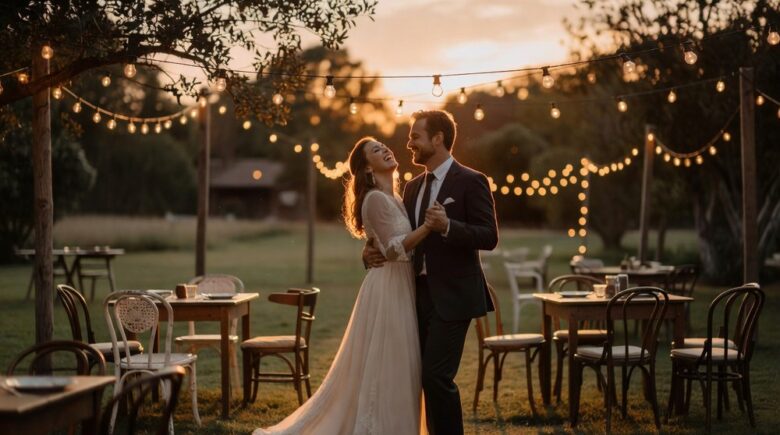
The backyard wedding isn’t just the budget option — it’s increasingly the preferred option. A well-decorated backyard with string lights, rented tables, and a food truck costs $3,000–$5,000 all-in and creates a more intimate, personal atmosphere than a generic ballroom. Public parks charge $200–$2,000 for permits and offer stunning natural backdrops for photos. Restaurant private rooms include food in the price, eliminating the separate catering line item entirely.
The key: visit non-traditional venues with fresh eyes. Community centers, art galleries, historic buildings, breweries, and farms all host weddings at 40–70% below dedicated wedding venue prices. Many don’t even advertise as wedding venues — call and ask. The CFPB recommends getting 3+ venue quotes and reading every contract clause before signing.
⚡ Pro Tip
Never tell a vendor it’s for a wedding until you’ve gotten the base price. The “wedding markup” is real — the same tent rental that costs $800 for a “family reunion” costs $1,400 for a “wedding reception.” Get the non-wedding quote in writing first, then mention it’s for a wedding. If the price jumps, you have leverage: “Your website shows this tent at $800 for events — why is it different for mine?” About 60% of vendors will honor the original quote when called out.

Timing Tricks: Day, Season & Time of Day Discounts
When you get married can save (or cost) you thousands without changing a single other detail. The wedding industry has massive demand peaks, and off-peak discounts are substantial.
Day of week: Saturday weddings command a 20–30% premium over Friday or Sunday events at the same venue. A $10,000 Saturday venue often drops to $7,000–$8,000 on Friday evening and $6,500–$7,500 on Sunday. Guests may grumble initially, but 95% still attend — and your savings fund a better honeymoon.
Season: June, September, and October are peak wedding months with peak pricing. November through March (excluding the two weeks around Christmas and New Year’s) is off-season, with venue discounts of 15–25% and vendor availability that’s dramatically better. A November wedding in a southern state still offers pleasant weather at off-season rates.
Time of day: Brunch and lunch weddings cost 40–50% less than dinner receptions because food costs drop dramatically (eggs and pancakes vs. filet mignon) and alcohol consumption is lower. A 10 AM ceremony + noon brunch reception for 80 guests can run $3,000–$5,000 total in catering — compared to $8,000–$12,000 for the same guest count at a dinner reception.
Catering & Alcohol: Feed 100 People Without Spending $15,000
After the venue, food and drink is the biggest budget line — averaging $85–$150 per person for a traditional sit-down dinner with an open bar. At 100 guests, that’s $8,500–$15,000. Here’s how to cut it in half.
Food trucks instead of traditional catering. Two food trucks (one savory, one dessert) serve 100 guests for $2,500–$4,500 total. Guests love the novelty, the food is made fresh, and you eliminate the $1,500–$3,000 in rentals (plates, silverware, linens) that traditional catering requires. Taco trucks, BBQ, pizza, and gourmet burger trucks are the most popular wedding choices.
Beer and wine only — skip the full open bar. A full open bar with top-shelf liquor costs $45–$85 per person. Beer and wine only: $15–$25 per person. On 100 guests, that’s $2,000–$6,000 in savings. If you want cocktails, offer a signature cocktail (one batch-mixed drink) alongside beer and wine — it costs $3–$5 per person more than beer/wine alone but feels premium.
Buffet over plated service. Plated dinner requires more servers ($800–$1,500 in labor) and per-plate costs run 20–30% higher than buffet equivalents. A buffet for 100 guests costs $3,500–$6,000 versus $5,000–$9,000 for the same menu plated. Guests also waste less food at buffets because they serve themselves what they’ll actually eat.
| Budget Category | Traditional Cost (100 guests) | Budget Alternative | Savings |
|---|---|---|---|
| Venue | $8,000–$15,000 | Backyard + tent: $2,000–$4,000 | $6,000–$11,000 |
| Catering | $8,500–$15,000 | Food trucks: $2,500–$4,500 | $6,000–$10,500 |
| Alcohol | $4,500–$8,500 | Beer/wine + signature cocktail: $2,000–$3,000 | $2,500–$5,500 |
| Flowers | $2,000–$5,000 | Wholesale + DIY: $300–$800 | $1,700–$4,200 |
| Photography | $3,000–$6,000 | Newer pro (2–3yr experience): $1,200–$2,500 | $1,800–$3,500 |
Traditional vs. budget wedding cost comparison for 100 guests. Sources: The Knot, WeddingWire. Verified March 2026.
DIY Decor, Flowers & Invitations That Don’t Look DIY
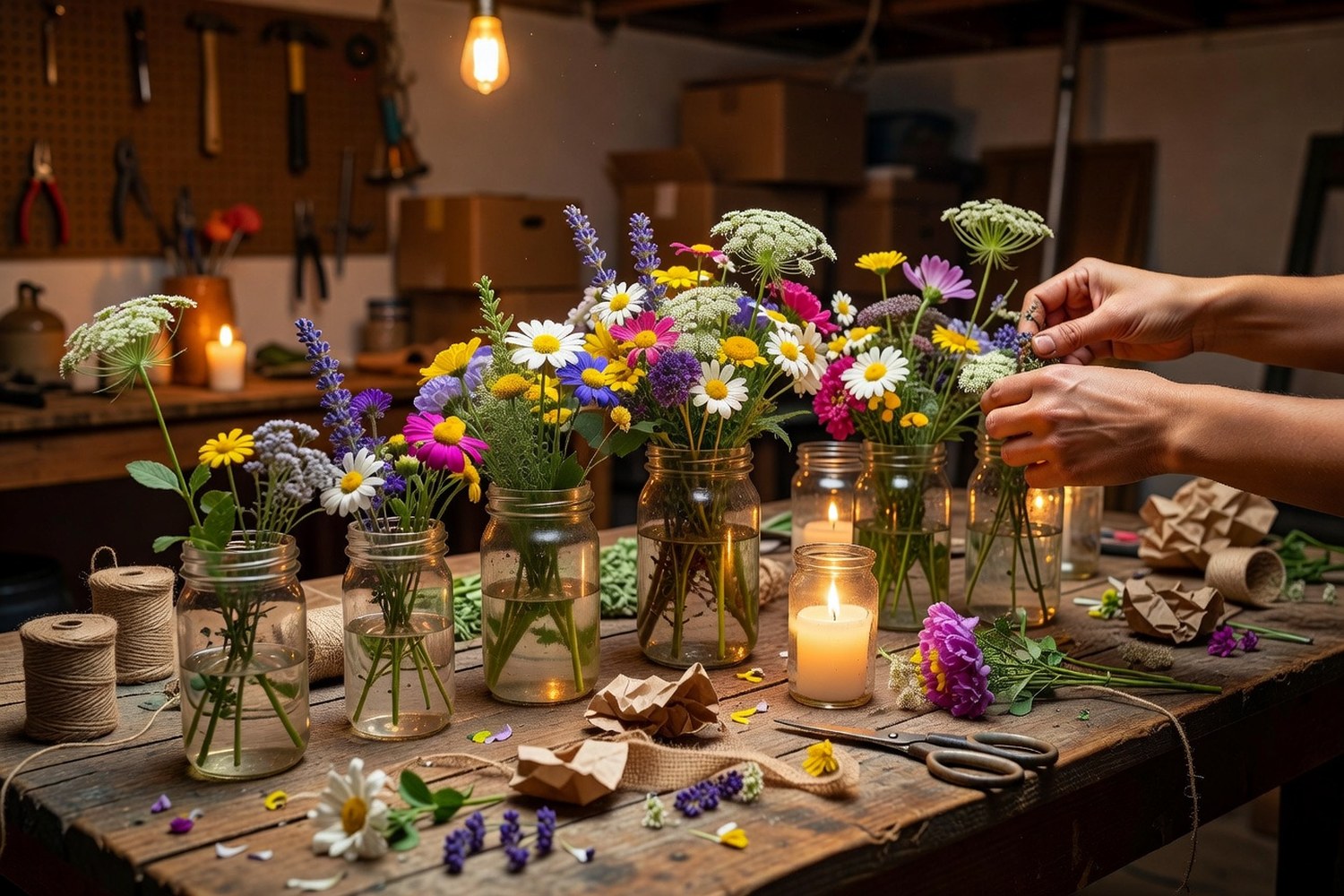
Flowers are the most overpriced line item in weddings, full stop. A “modest” floral package from a wedding florist — bridal bouquet, 4 bridesmaid bouquets, boutonnieres, and 10 centerpieces — runs $2,000–$5,000. The wholesale cost of those same flowers from a bulk flower market or Costco? $200–$600. The difference is labor and markup, and both are things you (or a talented friend) can handle.
Wholesale flower sources: Costco and Sam’s Club sell wedding flower packages starting at $200 for enough blooms for bouquets and centerpieces. FiftyFlowers.com ships bulk flowers directly to your door 2 days before the event. Buy twice what you think you need (waste rate on amateur arrangements is 30–40%) and you’re still saving $1,500+ versus a florist.
Invitations: traditional printed wedding invitations cost $400–$1,200 for 100 sets. Digital invitations through sites like Paperless Post cost $50–$150 for the same quantity with RSVP tracking built in. Physical invitations from Canva templates printed at a local print shop run $100–$250. The saved $300–$1,000 buys a lot of champagne.
String lights are the single highest-ROI wedding decoration. A $150 investment in 300 feet of warm LED string lights transforms any backyard, barn, or tent into a magazine-worthy venue. Add $50 in bulk candles and $80 in fabric draping and you’ve created an atmosphere that competes with $3,000 “event design” packages. Our guide to items people overpay for covers more areas where the premium version isn’t worth it.
⚡ Pro Tip
Buy a used wedding dress. Sites like StillWhite.com, PreOwnedWeddingDresses.com, and local consignment shops sell designer gowns at 40–70% off retail. A $3,000 dress sells for $900–$1,500 after one wearing. Get it tailored for $200–$400 and it fits better than off-the-rack. Total savings: $1,100–$2,500 on a single garment. The same logic applies to suits — rent for $150–$300 instead of buying for $500–$800.
Photography & Music: Where to Splurge vs. Save
Photography is the one area I’d push back on cutting too aggressively. Photos are the only tangible thing that lasts from your wedding — the food is eaten, the flowers die, the dress goes in a closet. But “don’t cut” doesn’t mean “spend $6,000.”
The sweet spot: hire a talented photographer with 2–3 years of wedding experience (not 10+). Their portfolio shows they can shoot — they just don’t have the brand name yet. Rates: $1,200–$2,500 for full-day coverage including edited digital files. Compare that to established wedding photographers at $4,000–$8,000 for equivalent deliverables. Check Instagram hashtags for your city + “wedding photographer” and look at portfolios, not follower counts.
Music: a live wedding band costs $2,500–$6,000 for 4 hours. A professional DJ costs $800–$2,000. A curated Spotify playlist through a rented PA system costs $150–$300 (speaker rental + someone willing to manage it). For a casual backyard or restaurant reception, the playlist approach works perfectly. For a 150-person dance floor, invest in a DJ — they read the room and keep energy up in ways a playlist can’t. Skip the live band unless music is genuinely the couple’s top priority.
The Guest List Math: Every Person Costs $150–$300
This is the lever nobody wants to pull — but it’s the most powerful one. At $150–$300 per guest (food, drink, chair, plate, favor, percentage of venue and vendor costs), every person you add or remove moves the budget by that amount. Cutting 20 guests saves $3,000–$6,000. That alone might be the difference between a wedding you can afford in cash and one you finance on a credit card.
The honest framework: make the guest list in three tiers. Tier 1: people whose absence would be noticed and painful (usually 30–50 people). Tier 2: people you’d love to invite but could understand not being included (another 30–50). Tier 3: obligation invites — distant relatives, work colleagues, friends-of-parents you’ve met twice. Cut Tier 3 entirely. Consider cutting Tier 2 in half.
A 60-person wedding at $200/guest costs $12,000 in guest-related expenses. A 120-person wedding costs $24,000. Same couple, same love, same vows — double the price. And I’ll let you in on something: couples who have 60-person weddings consistently report more enjoyment than those with 150+ guests because they actually spend time with everyone present rather than speed-greeting for 4 hours. The Federal Reserve’s wealth data shows that couples who start marriage without consumer debt accumulate net worth 2.4x faster by age 40.
Frequently Asked Questions
What is the average cost of a wedding in the United States?
The average American wedding costs approximately $35,000 according to Bureau of Labor Statistics data and industry surveys. However, the median is closer to $22,000 — the average is skewed by high-cost metro weddings. Couples who set a firm budget and use cost-saving strategies consistently spend $10,000 to $15,000 for a comparable guest experience.
How can I cut my wedding budget in half?
The three biggest levers: switch to a non-traditional venue like a backyard, park, or restaurant (saves $6,000 to $11,000), use food trucks or buffet instead of plated dinner (saves $4,000 to $8,000), and trim the guest list by 30 to 40 people (saves $4,500 to $12,000). Combined, these three changes alone can reduce a $35,000 wedding to $15,000 without affecting the ceremony or celebration quality.
Is it cheaper to get married on a weekday?
Yes. Friday and Sunday weddings cost 20 to 30% less than Saturday events at the same venue. A venue charging $10,000 on Saturday typically offers $7,000 to $8,000 on Friday evening. Most vendors also offer weekday discounts. Off-season months (November through March, excluding late December) add another 15 to 25% savings on top of the day-of-week discount.
How much should I budget for wedding photography?
Budget $1,200 to $2,500 for a talented newer photographer with 2 to 3 years of wedding experience. Established photographers charge $4,000 to $8,000 for similar deliverables. Check portfolios not follower counts — newer photographers produce excellent work at lower rates because they’re building their brand. Always request full galleries from recent weddings, not just curated highlight reels.
Should I pay for my wedding with a credit card?
Only if you can pay the full balance by the due date to earn rewards points. At 22% APR, financing $15,000 in wedding expenses on a credit card and making minimum payments costs $12,600 in interest over 7 years. A 2% rewards card on $15,000 earns $300. The math is brutal — pay cash or wait until you’ve saved enough. Starting marriage in credit card debt is the opposite of a good foundation.
References
- Bureau of Labor Statistics, 2026, “Consumer Expenditure Survey — Ceremonies & Celebrations,” bls.gov
- Consumer Financial Protection Bureau, 2026, “Wedding Financing and Consumer Debt,” consumerfinance.gov
- Federal Reserve Board, 2026, “Survey of Consumer Finances — Household Debt and Wealth,” federalreserve.gov
- Internal Revenue Service, 2026, “Gift Tax Exclusion for Wedding Contributions,” irs.gov
- Federal Trade Commission, 2026, “Consumer Protection — Event Vendor Contracts,” ftc.gov
- Bureau of Labor Statistics, 2026, “Regional Price Parities — Service Sector,” bls.gov
- Consumer Financial Protection Bureau, 2026, “Credit Card Interest Rate Data,” consumerfinance.gov
- Federal Reserve Board, 2026, “Consumer Credit G.19 Release — Wedding Debt Trends,” federalreserve.gov
- Small Business Administration, 2026, “Starting a Catering or Event Business — Cost Data,” sba.gov
- Federal Deposit Insurance Corporation, 2026, “Consumer Savings and Short-Term Debt,” fdic.gov
Keep Reading
More on smart spending and saving: