
Key Takeaways
- The Producer Price Index (PPI) measures price changes from the seller’s perspective — it tracks what businesses pay for goods and services before those costs reach consumers.
- PPI typically leads CPI by 1–3 months: when producer prices rise, consumer prices usually follow, making PPI a valuable early warning signal for inflation investors.
- A rising PPI squeezes corporate profit margins unless companies can pass costs to consumers — which directly affects earnings and equity valuations.
- Sectors most sensitive to PPI movements include industrials, materials, energy, and consumer staples — understanding PPI helps you position sector exposure intelligently.
Table of Contents
- What the PPI Actually Measures
- PPI vs. CPI: Why Both Matter and How They Interact
- How PPI Releases Move Markets
- Sector-by-Sector Impact: Which Investments Are Most Sensitive
- PPI Signal Guide: What Different Readings Mean
- How to Incorporate PPI Into Your Investment Process
- PPI and Federal Reserve Policy: The Critical Connection
- References & Keep Reading
What the PPI Actually Measures
I’m an engineer turned FIRE blogger, and my whole investment philosophy is built on data. So let me start with the actual definition before we get into why this matters for your portfolio — because most people have a fuzzy understanding of PPI at best.
The Producer Price Index is published monthly by the Bureau of Labor Statistics and measures the average change over time in the selling prices received by domestic producers for their output. The key phrase is “selling prices received by producers” — this is the price businesses get for their goods and services, not the price consumers pay at the end of the chain.
Think of it this way: the CPI measures what you pay for a loaf of bread at the grocery store. The PPI measures what the wheat farmer received for the wheat, what the mill received for the flour, and what the bakery received for the finished bread — all the upstream price changes before the product reaches you. PPI captures cost pressures at every stage of production.
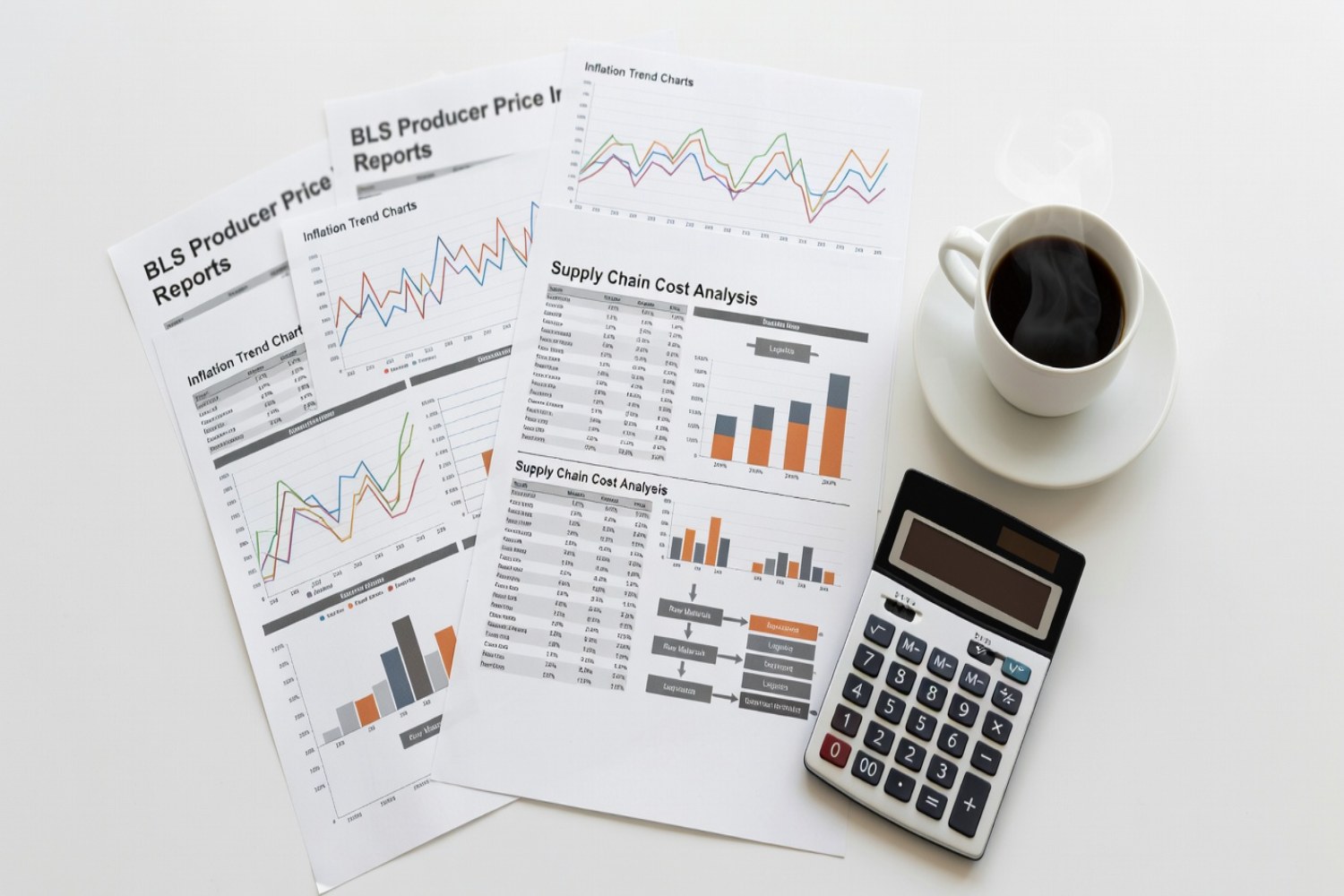
The BLS publishes three major PPI series: Final Demand PPI (the headline number, measuring prices for goods and services sold for final use), Intermediate Demand PPI (prices for partially processed goods — a leading indicator within the leading indicator), and Crude Goods PPI (raw materials prices — the earliest stage and most volatile). For investors, the Final Demand PPI is the primary number to track, but watching all three gives you a sense of where pressure is building in the pipeline.
PPI vs. CPI: Why Both Matter and How They Interact
Here’s the relationship that makes PPI genuinely useful as an investment signal: producer prices typically lead consumer prices by one to three months. When businesses face higher input costs — raw materials, energy, labor — they eventually pass those costs through the supply chain to consumers. That transmission isn’t instant, but it’s fairly predictable.
This means a sustained rise in PPI is a leading warning that CPI is likely to follow. And since Federal Reserve policy responds to CPI, a rising PPI trend gives you advance notice that inflationary pressure is building — potentially before the Fed has fully registered it in its own forecasts. That’s actionable information.
The divergence between PPI and CPI is also informative. When PPI is rising faster than CPI, it means businesses are absorbing cost increases rather than passing them through — which compresses profit margins. That’s a negative signal for corporate earnings. When PPI falls faster than CPI, businesses are expanding margins — a positive signal for profitability. Watching the spread between PPI and CPI is one of my favorite ways to get an early read on earnings season surprises.
The relationship isn’t perfect. Retailers with pricing power can maintain margins even when PPI rises sharply. And deflationary periods can complicate the transmission. But as a general signal — particularly at cycle inflection points — the PPI-leads-CPI relationship is one of the more reliable patterns in macroeconomic data. For the broader framework of using economic indicators together, our guide to reading economic indicators as an investor covers the full toolkit.
How PPI Releases Move Markets
PPI is released monthly, typically on the second week of the month — often the day before CPI. The market reaction depends almost entirely on whether the number surprises relative to consensus expectations. A PPI print that matches expectations usually produces minimal market movement. A significant surprise — in either direction — can move bond yields, equity futures, and currency markets within minutes of release.
Here’s how the surprise dynamics typically play out:
Higher than expected PPI: Bond yields rise (inflation expectation premium increases), bond prices fall, growth stocks underperform (higher discount rates compress valuations), commodity-linked stocks and energy outperform, the dollar may strengthen (anticipating Fed hawkishness), and gold prices often fall initially. The Fed is likely to maintain or increase its hawkish posture.
Lower than expected PPI: Bond yields fall, bond prices rise, growth and technology stocks rally (lower discount rates support high-multiple valuations), defensive sectors underperform on a relative basis, and the Fed gains more room to cut rates. This is the “good news for markets” scenario.
The magnitude of the market reaction depends on the surprise size, the current inflation regime, and where the Fed is in its policy cycle. A 0.1% beat on PPI barely moves markets when inflation is already at target. A 0.4% beat when the Fed is trying to convince markets it’s done hiking can trigger significant repricing.
⚡ Pro Tip
Mark the PPI release date on your calendar every month — the BLS publishes the full economic release schedule a year in advance. The day before a PPI release, check the consensus forecast on any financial data site. Then watch the actual release. Over time, you’ll develop intuition for how your portfolio sectors tend to react to PPI surprises, which helps you decide whether to rebalance ahead of releases or simply hold through the volatility.
Sector-by-Sector Impact: Which Investments Are Most Sensitive
Not all sectors respond to PPI equally. The sensitivity depends on a sector’s position in the supply chain, its pricing power, and its cost structure.
Materials and Basic Resources. Highly sensitive — these companies are often the source of the PPI inputs themselves. Rising PPI in crude goods and intermediate demand benefits miners, chemical producers, and forestry companies directly. When PPI falls, these stocks often lead market declines as their product prices compress.
Industrials and Manufacturing. Very sensitive. Industrial companies face input cost pressure from both raw materials and intermediate goods. Those with strong pricing power (aerospace, specialized equipment) can pass costs through; commodity-exposed manufacturers get squeezed. Watch PPI intermediate demand as a proxy for industrial margin pressure.
Energy. Energy prices are both an input to PPI (energy is a major PPI component) and a product measured by PPI. Rising energy PPI directly boosts energy sector revenues. It’s simultaneously inflationary for every other sector that uses energy as an input — particularly transportation, chemicals, and manufacturing.
Consumer Staples. Moderate sensitivity. Staples companies face PPI-driven input cost pressure (food commodities, packaging, transportation) but have relatively stable demand and often significant pricing power. Their ability to pass costs through varies — private label competition limits pricing power for some; strong brand loyalty supports it for others.
Technology. Lower direct sensitivity, higher indirect sensitivity. Tech companies don’t face significant raw material PPI exposure, but they’re acutely sensitive to the interest rate implications of rising PPI. Higher PPI leads to higher inflation expectations, higher bond yields, and higher discount rates — which compress the valuations of high-multiple growth stocks disproportionately. A hot PPI print is generally bad for high-PE technology stocks, even when the tech sector has no direct cost exposure to the underlying price changes.
Financials. Complex. Banks benefit from steeper yield curves (wider net interest margins) that often accompany rising PPI expectations. But credit quality can deteriorate if PPI-driven inflation crimps consumer purchasing power. Insurance companies face PPI exposure through claims costs (auto parts, construction materials, medical equipment).

PPI Signal Guide: What Different Readings Mean
| PPI Scenario | Implication | Likely Market Impact | Portfolio Action |
|---|---|---|---|
| Rising, above expectations | Inflation building in pipeline | Bonds fall, growth stocks weak | Tilt to commodities, energy, value |
| Rising, in line with expectations | Inflation priced in | Minimal reaction | Hold current positioning |
| Falling, below expectations | Disinflation, Fed can ease | Bonds rally, growth stocks surge | Consider adding growth/tech exposure |
| Negative (deflation) | Demand destruction or glut | Mixed — watch corporate margins | Reduce materials/energy exposure |
| PPI rising, CPI stable | Margins being squeezed | Earnings risk — watch guidance | Favor pricing-power companies |
| Most Useful Signal | 3-month trend direction + surprise vs. consensus + intermediate demand vs. final demand spread | ||
How to Incorporate PPI Into Your Investment Process
Here’s the practical framework I use — calibrated for the individual investor who isn’t running a macro hedge fund but still wants to make smarter, more informed decisions.
Track the trend, not the single print. One month’s PPI data is almost always noisy. Three consecutive months of rising or falling readings starts to be meaningful. Six months is a clear trend. Don’t rebalance your portfolio after a single release — look for sustained directional moves before making allocation changes.
Watch intermediate demand PPI for the leading edge. Final demand PPI is the headline, but intermediate demand PPI (prices for partially processed goods) tends to lead final demand by another month or two. If intermediate demand PPI has been rising for three months, expect final demand to follow — which will then lead CPI. This gives you an extra layer of lead time.
Compare PPI to your sector holdings’ cost structures. Before each earnings season, check the PPI categories most relevant to your holdings’ major input costs. If you own consumer staples companies and food commodity PPI has been running hot for two quarters, expect margin pressure in the earnings reports — price your expectations accordingly. The SEC’s EDGAR database lets you check each company’s 10-K for cost structure details — find what percentage of COGS comes from PPI-sensitive inputs.
Use PPI as a Fed policy anticipation tool. The Federal Reserve watches both PPI and CPI closely. Rising PPI trends that haven’t yet shown up in CPI give you a read on where CPI is likely heading — and therefore where Fed policy is likely heading. Pair this with your broader economic indicator reading for a complete picture. Since we already discussed the full indicator framework in our economic indicators guide, the PPI fits neatly as a leading piece of that puzzle.
⚡ Pro Tip
Build a simple monthly tracking sheet: record the month’s PPI Final Demand reading, the Intermediate Demand reading, the consensus expectation, and the CPI reading from the prior month. After six months, you’ll have a data set that lets you see the lead-lag relationship with your own eyes. When you’ve built that intuition from real data rather than abstract explanation, you’ll use PPI much more confidently in your investment decision-making. Data-driven conviction beats borrowed opinion every time.
PPI and Federal Reserve Policy: The Critical Connection
The Federal Reserve’s dual mandate is price stability and maximum employment. PPI matters to the Fed because it’s an upstream inflation signal — and the Fed would much rather catch inflation at the producer level before it becomes entrenched at the consumer level.
When PPI runs persistently above the Fed’s 2% inflation target for final demand, it creates pressure to maintain or increase the federal funds rate — regardless of where CPI is at that moment. The Fed’s own research has repeatedly shown that producer price pressures are a reliable leading indicator of consumer inflation, and the Fed builds its forward projections accordingly.
The Federal Reserve’s semi-annual Monetary Policy Report explicitly discusses PPI trends as part of its inflation assessment. When Fed Chair communications reference “pipeline inflation pressures” or “upstream price dynamics,” they’re talking about exactly what PPI measures. Learning to read PPI gives you a window into the Fed’s thinking — before they make it explicit in their official communications.
For investors with exposure to fixed income, this matters enormously. Rising PPI trends that suggest future CPI increases mean the Fed is likely to hold rates higher for longer — which keeps bond prices under pressure. Falling PPI trends open the door to rate cuts — which supports bond prices and particularly benefits long-duration assets. Our guide on how Fed rate decisions flow through to asset prices shows how these macro connections play out in practice.
References
- U.S. Bureau of Labor Statistics. (2025). “Producer Price Indexes.” BLS.gov
- Federal Reserve. (2025). “Monetary Policy Report.” FederalReserve.gov
- U.S. Securities and Exchange Commission. (2025). “EDGAR Company Filings.” SEC.gov
Keep Reading:

- Reading Economic Indicators: A Plain-English Guide for Investors
- How Currency Fluctuations Affect Car Prices & Auto Loans
- Corporate Social Responsibility & What It Means for Your Portfolio
- Real Estate Investing for Beginners: The Numbers-First Approach
Key Takeaways
- The Producer Price Index (PPI) measures price changes from the seller’s perspective — it tracks what businesses pay for goods and services before those costs reach consumers.
- PPI typically leads CPI by 1–3 months: when producer prices rise, consumer prices usually follow, making PPI a valuable early warning signal for inflation investors.
- A rising PPI squeezes corporate profit margins unless companies can pass costs to consumers — which directly affects earnings and equity valuations.
- Sectors most sensitive to PPI movements include industrials, materials, energy, and consumer staples — understanding PPI helps you position sector exposure intelligently.
Table of Contents
- What the PPI Actually Measures
- PPI vs. CPI: Why Both Matter and How They Interact
- How PPI Releases Move Markets
- Sector-by-Sector Impact: Which Investments Are Most Sensitive
- PPI Signal Guide: What Different Readings Mean
- How to Incorporate PPI Into Your Investment Process
- PPI and Federal Reserve Policy: The Critical Connection
- References & Keep Reading
What the PPI Actually Measures
I’m an engineer turned FIRE blogger, and my whole investment philosophy is built on data. So let me start with the actual definition before we get into why this matters for your portfolio — because most people have a fuzzy understanding of PPI at best.
The Producer Price Index is published monthly by the Bureau of Labor Statistics and measures the average change over time in the selling prices received by domestic producers for their output. The key phrase is “selling prices received by producers” — this is the price businesses get for their goods and services, not the price consumers pay at the end of the chain.
Think of it this way: the CPI measures what you pay for a loaf of bread at the grocery store. The PPI measures what the wheat farmer received for the wheat, what the mill received for the flour, and what the bakery received for the finished bread — all the upstream price changes before the product reaches you. PPI captures cost pressures at every stage of production.
The BLS publishes three major PPI series: Final Demand PPI (the headline number, measuring prices for goods and services sold for final use), Intermediate Demand PPI (prices for partially processed goods — a leading indicator within the leading indicator), and Crude Goods PPI (raw materials prices — the earliest stage and most volatile). For investors, the Final Demand PPI is the primary number to track, but watching all three gives you a sense of where pressure is building in the pipeline.

PPI vs. CPI: Why Both Matter and How They Interact
Here’s the relationship that makes PPI genuinely useful as an investment signal: producer prices typically lead consumer prices by one to three months. When businesses face higher input costs — raw materials, energy, labor — they eventually pass those costs through the supply chain to consumers. That transmission isn’t instant, but it’s fairly predictable.
This means a sustained rise in PPI is a leading warning that CPI is likely to follow. And since Federal Reserve policy responds to CPI, a rising PPI trend gives you advance notice that inflationary pressure is building — potentially before the Fed has fully registered it in its own forecasts. That’s actionable information.
The divergence between PPI and CPI is also informative. When PPI is rising faster than CPI, it means businesses are absorbing cost increases rather than passing them through — which compresses profit margins. That’s a negative signal for corporate earnings. When PPI falls faster than CPI, businesses are expanding margins — a positive signal for profitability. Watching the spread between PPI and CPI is one of my favorite ways to get an early read on earnings season surprises.
The relationship isn’t perfect. Retailers with pricing power can maintain margins even when PPI rises sharply. And deflationary periods can complicate the transmission. But as a general signal — particularly at cycle inflection points — the PPI-leads-CPI relationship is one of the more reliable patterns in macroeconomic data. For the broader framework of using economic indicators together, our guide to reading economic indicators as an investor covers the full toolkit.
How PPI Releases Move Markets
PPI is released monthly, typically on the second week of the month — often the day before CPI. The market reaction depends almost entirely on whether the number surprises relative to consensus expectations. A PPI print that matches expectations usually produces minimal market movement. A significant surprise — in either direction — can move bond yields, equity futures, and currency markets within minutes of release.
Here’s how the surprise dynamics typically play out:
Higher than expected PPI: Bond yields rise (inflation expectation premium increases), bond prices fall, growth stocks underperform (higher discount rates compress valuations), commodity-linked stocks and energy outperform, the dollar may strengthen (anticipating Fed hawkishness), and gold prices often fall initially. The Fed is likely to maintain or increase its hawkish posture.
Lower than expected PPI: Bond yields fall, bond prices rise, growth and technology stocks rally (lower discount rates support high-multiple valuations), defensive sectors underperform on a relative basis, and the Fed gains more room to cut rates. This is the “good news for markets” scenario.
The magnitude of the market reaction depends on the surprise size, the current inflation regime, and where the Fed is in its policy cycle. A 0.1% beat on PPI barely moves markets when inflation is already at target. A 0.4% beat when the Fed is trying to convince markets it’s done hiking can trigger significant repricing.
⚡ Pro Tip
Mark the PPI release date on your calendar every month — the BLS publishes the full economic release schedule a year in advance. The day before a PPI release, check the consensus forecast on any financial data site. Then watch the actual release. Over time, you’ll develop intuition for how your portfolio sectors tend to react to PPI surprises, which helps you decide whether to rebalance ahead of releases or simply hold through the volatility.
Sector-by-Sector Impact: Which Investments Are Most Sensitive
Not all sectors respond to PPI equally. The sensitivity depends on a sector’s position in the supply chain, its pricing power, and its cost structure.
Materials and Basic Resources. Highly sensitive — these companies are often the source of the PPI inputs themselves. Rising PPI in crude goods and intermediate demand benefits miners, chemical producers, and forestry companies directly. When PPI falls, these stocks often lead market declines as their product prices compress.
Industrials and Manufacturing. Very sensitive. Industrial companies face input cost pressure from both raw materials and intermediate goods. Those with strong pricing power (aerospace, specialized equipment) can pass costs through; commodity-exposed manufacturers get squeezed. Watch PPI intermediate demand as a proxy for industrial margin pressure.
Energy. Energy prices are both an input to PPI (energy is a major PPI component) and a product measured by PPI. Rising energy PPI directly boosts energy sector revenues. It’s simultaneously inflationary for every other sector that uses energy as an input — particularly transportation, chemicals, and manufacturing.
Consumer Staples. Moderate sensitivity. Staples companies face PPI-driven input cost pressure (food commodities, packaging, transportation) but have relatively stable demand and often significant pricing power. Their ability to pass costs through varies — private label competition limits pricing power for some; strong brand loyalty supports it for others.
Technology. Lower direct sensitivity, higher indirect sensitivity. Tech companies don’t face significant raw material PPI exposure, but they’re acutely sensitive to the interest rate implications of rising PPI. Higher PPI leads to higher inflation expectations, higher bond yields, and higher discount rates — which compress the valuations of high-multiple growth stocks disproportionately. A hot PPI print is generally bad for high-PE technology stocks, even when the tech sector has no direct cost exposure to the underlying price changes.
Financials. Complex. Banks benefit from steeper yield curves (wider net interest margins) that often accompany rising PPI expectations. But credit quality can deteriorate if PPI-driven inflation crimps consumer purchasing power. Insurance companies face PPI exposure through claims costs (auto parts, construction materials, medical equipment).

PPI Signal Guide: What Different Readings Mean
| PPI Scenario | Implication | Likely Market Impact | Portfolio Action |
|---|---|---|---|
| Rising, above expectations | Inflation building in pipeline | Bonds fall, growth stocks weak | Tilt to commodities, energy, value |
| Rising, in line with expectations | Inflation priced in | Minimal reaction | Hold current positioning |
| Falling, below expectations | Disinflation, Fed can ease | Bonds rally, growth stocks surge | Consider adding growth/tech exposure |
| Negative (deflation) | Demand destruction or glut | Mixed — watch corporate margins | Reduce materials/energy exposure |
| PPI rising, CPI stable | Margins being squeezed | Earnings risk — watch guidance | Favor pricing-power companies |
| Most Useful Signal | 3-month trend direction + surprise vs. consensus + intermediate demand vs. final demand spread | ||
How to Incorporate PPI Into Your Investment Process
Here’s the practical framework I use — calibrated for the individual investor who isn’t running a macro hedge fund but still wants to make smarter, more informed decisions.
Track the trend, not the single print. One month’s PPI data is almost always noisy. Three consecutive months of rising or falling readings starts to be meaningful. Six months is a clear trend. Don’t rebalance your portfolio after a single release — look for sustained directional moves before making allocation changes.
Watch intermediate demand PPI for the leading edge. Final demand PPI is the headline, but intermediate demand PPI (prices for partially processed goods) tends to lead final demand by another month or two. If intermediate demand PPI has been rising for three months, expect final demand to follow — which will then lead CPI. This gives you an extra layer of lead time.
Compare PPI to your sector holdings’ cost structures. Before each earnings season, check the PPI categories most relevant to your holdings’ major input costs. If you own consumer staples companies and food commodity PPI has been running hot for two quarters, expect margin pressure in the earnings reports — price your expectations accordingly. The SEC’s EDGAR database lets you check each company’s 10-K for cost structure details — find what percentage of COGS comes from PPI-sensitive inputs.
Use PPI as a Fed policy anticipation tool. The Federal Reserve watches both PPI and CPI closely. Rising PPI trends that haven’t yet shown up in CPI give you a read on where CPI is likely heading — and therefore where Fed policy is likely heading. Pair this with your broader economic indicator reading for a complete picture. Since we already discussed the full indicator framework in our economic indicators guide, the PPI fits neatly as a leading piece of that puzzle.
⚡ Pro Tip
Build a simple monthly tracking sheet: record the month’s PPI Final Demand reading, the Intermediate Demand reading, the consensus expectation, and the CPI reading from the prior month. After six months, you’ll have a data set that lets you see the lead-lag relationship with your own eyes. When you’ve built that intuition from real data rather than abstract explanation, you’ll use PPI much more confidently in your investment decision-making. Data-driven conviction beats borrowed opinion every time.
PPI and Federal Reserve Policy: The Critical Connection
The Federal Reserve’s dual mandate is price stability and maximum employment. PPI matters to the Fed because it’s an upstream inflation signal — and the Fed would much rather catch inflation at the producer level before it becomes entrenched at the consumer level.
When PPI runs persistently above the Fed’s 2% inflation target for final demand, it creates pressure to maintain or increase the federal funds rate — regardless of where CPI is at that moment. The Fed’s own research has repeatedly shown that producer price pressures are a reliable leading indicator of consumer inflation, and the Fed builds its forward projections accordingly.
The Federal Reserve’s semi-annual Monetary Policy Report explicitly discusses PPI trends as part of its inflation assessment. When Fed Chair communications reference “pipeline inflation pressures” or “upstream price dynamics,” they’re talking about exactly what PPI measures. Learning to read PPI gives you a window into the Fed’s thinking — before they make it explicit in their official communications.
For investors with exposure to fixed income, this matters enormously. Rising PPI trends that suggest future CPI increases mean the Fed is likely to hold rates higher for longer — which keeps bond prices under pressure. Falling PPI trends open the door to rate cuts — which supports bond prices and particularly benefits long-duration assets. Our guide on how Fed rate decisions flow through to asset prices shows how these macro connections play out in practice.
References
- U.S. Bureau of Labor Statistics. (2025). “Producer Price Indexes.” BLS.gov
- Federal Reserve. (2025). “Monetary Policy Report.” FederalReserve.gov
- U.S. Securities and Exchange Commission. (2025). “EDGAR Company Filings.” SEC.gov
Keep Reading: