
Quick Answer
You can save money on groceries without couponing by shopping with a meal plan, choosing store brands, buying in bulk for shelf-stable items, and shopping at discount grocers like Aldi or Lidl. In July 2025, the average U.S. household spends $475–$1,175 per month on food at home — strategic shopping habits alone can cut that bill by up to 25%.
The most effective way to save money on groceries is to change how you shop — not how many coupons you clip. According to the U.S. Bureau of Labor Statistics’ Consumer Expenditure Survey, food at home is the third-largest household expense category, with Americans spending an average of $5,703 per year on groceries. That number has climbed sharply since 2021, making intentional shopping more important than ever.
This guide covers proven, coupon-free strategies that reduce your grocery bill immediately. You will learn how meal planning, store selection, buying habits, and shopping psychology work together to keep more money in your pocket every week.
Key Takeaways
- The average U.S. household spends $5,703 per year on groceries, according to BLS Consumer Expenditure data — making grocery savings one of the highest-leverage budget moves available.
- Store-brand products cost 20–30% less than national-brand equivalents, according to Consumer Reports’ store brand analysis, with comparable quality in most categories.
- Shoppers who use a written grocery list spend an average of 23% less per trip than those who shop without one, according to research published by the American Psychological Association.
- Discount grocery chains like Aldi price items 14–40% below traditional supermarket chains on comparable products, according to Dunnhumby’s Retailer Preference Index.
- Food waste costs the average American household $1,500 per year, according to USDA food waste estimates — reducing waste is one of the fastest ways to lower your effective grocery spend.
In This Guide
- Does Meal Planning Really Save Money on Groceries?
- Which Grocery Stores Save You the Most Money?
- Are Store Brands Worth Buying Instead of Name Brands?
- When Does Buying in Bulk Actually Save Money?
- How Does Reducing Food Waste Lower Your Grocery Bill?
- How Does Grocery Store Psychology Affect What You Spend?
- What Simple Swaps Cut Grocery Costs Without Sacrificing Quality?
Does Meal Planning Really Save Money on Groceries?
Yes — meal planning is the single most effective coupon-free strategy to save money on groceries. Planning meals before you shop prevents impulse purchases, eliminates duplicate buys, and reduces food waste, all of which drain your budget silently.
A structured meal plan lets you build a precise shopping list tied to actual meals. Shoppers who enter a store with a list consistently spend less. According to American Psychological Association research, list-based shoppers spend an average of 23% less per trip than unplanned shoppers.
How to Build a Practical Weekly Meal Plan
Start by checking what you already own before writing a single item on your list. Then plan five to six dinners, two to three lunches, and build breakfasts around staples like oats, eggs, and fruit. Carry forward one or two “use it up” nights each week to cook from leftovers.
Batch cooking is an extension of meal planning that multiplies your savings. Cooking a large pot of rice, a sheet pan of roasted vegetables, or a slow-cooker protein at the start of the week provides the base for multiple meals. This reduces reliance on expensive convenience foods midweek when time runs short.
Plan meals around what is already on sale at your store that week — not the other way around. Check your store’s weekly circular before building the meal plan, not after. This single habit reversal can save an additional $30–$60 per month without any coupons.
Which Grocery Stores Save You the Most Money?
Discount grocery chains consistently offer the lowest prices, and switching stores is one of the fastest ways to save money on groceries without changing what you buy. Aldi and Lidl regularly price staple items 14–40% below traditional supermarket chains, according to Dunnhumby’s annual Retailer Preference Index.
Not every store is best for every category. A strategic approach is to use a discount grocer for staples — produce, dairy, pantry goods — and supplement with a warehouse club like Costco or Sam’s Club for bulk purchases on items your household consistently uses.
Comparing Common Grocery Store Types by Price Level
| Store Type | Average Price vs. National Average | Best For |
|---|---|---|
| Aldi / Lidl | 14–40% below average | Produce, dairy, pantry staples |
| Costco / Sam’s Club | 15–30% below average (bulk) | Meat, paper goods, frozen items |
| Walmart / Target | 5–10% below average | Packaged goods, household items |
| Traditional Supermarkets | At or near average | Full selection, specialty items |
| Whole Foods / Sprouts | 20–40% above average | Organic, specialty, prepared foods |
Grocery delivery and pickup services from Instacart or store-native apps add service fees and tip expectations that erase savings quickly. Shopping in-store at a discount grocer is almost always less expensive than convenience delivery from a premium chain.
Aldi operates with a limited-SKU model — typically 1,400 products compared to a traditional supermarket’s 30,000 — which keeps overhead low and allows consistently lower prices. Fewer choices actually work in your favor when the goal is to save money on groceries.
Are Store Brands Worth Buying Instead of Name Brands?
Store brands are almost always worth buying. Consumer Reports’ blind taste-test analysis found that store-brand products are rated comparable or superior to national-brand equivalents in the majority of categories tested. The price gap is significant — store brands cost 20–30% less on average.
The private-label grocery market has grown substantially. Kroger, Trader Joe’s, Costco (Kirkland Signature), and Walmart (Great Value) all operate robust store-brand lines that cover virtually every grocery category. Kirkland Signature products in particular are widely regarded as benchmark quality in categories like olive oil, nuts, and salmon.
Where Store Brands Deliver the Best Value
The highest savings come in commodity categories where ingredients are standardized. Swap national brands for store brands in these areas first:
- Canned tomatoes, beans, and vegetables
- Dried pasta and rice
- Frozen vegetables and fruit
- Spices and baking ingredients
- Dairy staples — butter, milk, shredded cheese
- Paper towels, foil, and plastic wrap
Categories where brand loyalty has more merit include certain condiments, specific flavored snacks, and products where formulation differences are meaningful (e.g., some hot sauces, specialty cheeses). Outside those narrow exceptions, the store brand nearly always wins on value.
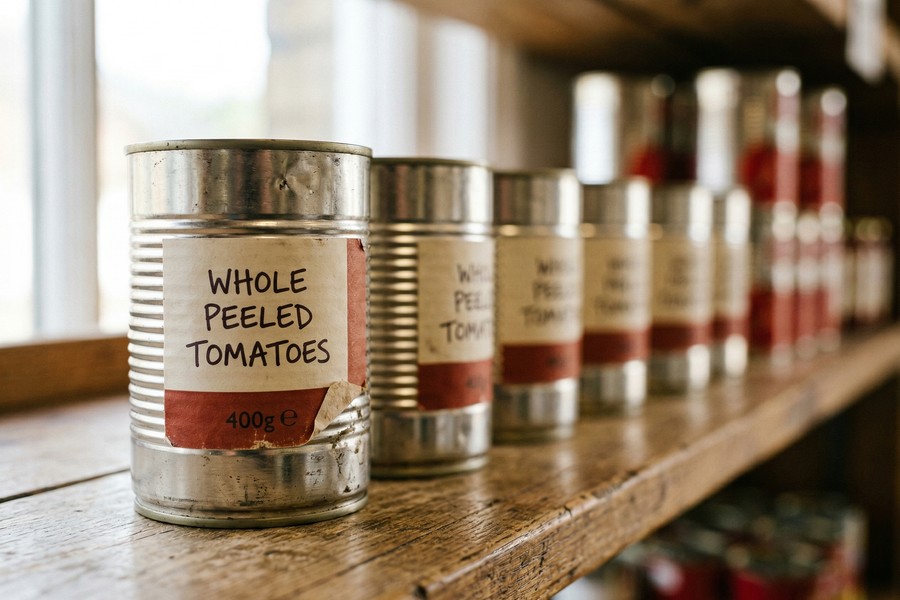
“The data consistently shows that private-label products have closed the quality gap with national brands. In blind tests, consumers frequently prefer the store brand — the national brand premium is almost entirely marketing, not product superiority.”
When Does Buying in Bulk Actually Save Money?
Buying in bulk saves money only when two conditions are met: the item is non-perishable or has a long shelf life, and your household will actually use it before it expires. Buying a large container of something that spoils before you finish it is more expensive than buying the smaller size.
Warehouse clubs like Costco and Sam’s Club offer genuine savings on the right categories. Annual memberships ($65 for Costco, $50 for Sam’s Club) pay for themselves quickly if you regularly buy meat, cooking oil, nuts, cleaning supplies, and paper goods in bulk.
Best and Worst Bulk Buys
Best bulk buys include dried beans and lentils, rolled oats, rice, cooking oils, frozen protein, coffee, canned goods, and household staples like dish soap and laundry detergent. These items have long shelf lives and consistent unit prices that beat grocery store equivalents by 15–30%.
Avoid buying fresh produce, bread, most fresh dairy, or specialty condiments in bulk unless you have a large household or a clear plan to use them. Half-used items that go to waste cancel every dollar of per-unit savings.
The average Costco member saves approximately $500 per year on groceries and household goods compared to buying the same items at traditional retailers, according to consumer spending analyses cited by The Motley Fool’s retail research — well above the cost of an annual membership.
How Does Reducing Food Waste Lower Your Grocery Bill?
Reducing food waste is a direct, immediate way to save money on groceries — because every piece of food you throw away is money already spent. The USDA estimates that food waste costs the average American household $1,500 per year. Cutting that number even by half equals $750 in annual savings without buying anything differently.
The most common waste drivers are overbuying, poor storage, and failure to use leftovers. Meal planning addresses overbuying. Proper storage extends shelf life. Scheduling one or two “use it up” meals per week handles leftovers before they spoil.
Storage Habits That Extend Food Life
Proper storage dramatically extends produce life. Herbs stored upright in water like a bouquet last up to two weeks longer than when stored loosely in a bag. Leafy greens wrapped in paper towels inside a sealed container stay crisp for seven to ten days. Most fresh berries last longer when stored dry and washed only immediately before eating.
The freezer is the most underused tool in household food management. Bread, bananas, cooked grains, soups, and most proteins freeze well. Freezing items before they spoil converts what would have been waste into a future meal at zero additional cost.
If you are working to reduce food waste as part of a broader budget overhaul, it pairs naturally with trimming other recurring expenses. The everyday cost-cutting strategies outlined here at The Finance Tree apply the same “audit before you spend” logic across multiple budget categories.
How Does Grocery Store Psychology Affect What You Spend?
Grocery stores are deliberately designed to maximize your spending — and understanding their tactics is a practical way to save money on groceries without any coupons. End-cap displays, eye-level product placement, and strategic store layouts are all engineered to drive impulse purchases.
Research from the Journal of Consumer Research found that shoppers make over 50% of their in-store purchases on impulse — items not on their list before entering the store. That number drops significantly when shoppers enter with a specific list and a defined budget.
Tactical Shopping Habits That Reduce Overspending
Never shop hungry. Hunger increases caloric cravings and decreases decision-making quality. Studies consistently show that hungry shoppers spend more on high-calorie, higher-priced convenience items.
Shop the perimeter first. Fresh produce, dairy, meat, and eggs — the most nutritious and cost-efficient foods — line the outer edges of most grocery stores. Processed and packaged goods (higher-margin, higher-cost) dominate the interior aisles. A perimeter-first approach keeps your cart aligned with your list and your budget.
Be skeptical of “sale” signage. Items displayed with large price tags and sale signage are not always the best value per unit. Always check the unit price (price per ounce or per pound) on the shelf label — that is the only apples-to-apples comparison that matters.

Products placed at eye level on grocery shelves generate 35% more sales than identical products on lower or higher shelves, according to retail merchandising research. Premium and national-brand products pay for prime shelf placement — store brands are often placed lower, but offer the same or better value.
What Simple Swaps Cut Grocery Costs Without Sacrificing Quality?
Strategic ingredient substitutions are one of the most underrated ways to save money on groceries. Swapping expensive proteins and produce for budget-friendly equivalents cuts costs without reducing nutrition or meal quality.
Whole chickens cost substantially less per pound than boneless skinless breasts. Dried beans are dramatically cheaper than canned — and cooking a batch on the stovetop or in an Instant Pot takes about 30 minutes of active effort. Frozen vegetables retain the same nutrient profile as fresh, at a fraction of the cost.
High-Impact Substitution Examples
Consider these swaps as a starting framework:
- Boneless chicken breast → Bone-in thighs (typically 40–50% cheaper per pound)
- Canned beans → Dried beans (about 60–70% cheaper per equivalent serving)
- Pre-washed salad mix → Whole romaine or cabbage (often 3x cheaper per serving)
- Pre-cut fruit or vegetables → Whole produce cut at home (typically 30–50% cheaper)
- Flavored instant oatmeal packets → Plain rolled oats with toppings added at home
- Bottled salad dressing → Oil, vinegar, and salt mixed at home for under $0.10 per serving
These substitutions require modest adjustments in kitchen habits, not cooking expertise. Most take under five minutes of additional preparation time and deliver consistent weekly savings.
Grocery savings do not exist in a vacuum. When you free up money in your food budget, that surplus belongs somewhere intentional — whether that is building an emergency fund, accelerating debt payoff, or investing. For an overview of how small recurring savings compound over time, see The Finance Tree’s breakdown of how compounding works on small savings contributions.
Rising grocery prices are also part of a broader inflation picture. Understanding how inflation data like the Consumer Price Index affects your everyday spending helps put grocery cost increases in context and informs smarter budgeting decisions overall.
And if streaming subscriptions are another line item eating into your budget, consider pairing your grocery savings effort with a review of your recurring digital costs — a closer look at subscription spending in 2026 shows how fast those charges add up alongside rising food costs.
Frequently Asked Questions
How much money can you realistically save on groceries each month without coupons?
Most households can reduce their grocery spending by 15–25% through meal planning, store-brand switching, and discount store shopping alone. For a household spending $800 per month on groceries, that represents $120–$200 in monthly savings without a single coupon.
Is it worth switching to Aldi or Lidl for all of your grocery shopping?
For most households, yes. Aldi and Lidl price staple items 14–40% below traditional supermarkets on comparable products. The limited selection model means some specialty items require a secondary store, but the majority of weekly grocery needs can be met at a deep discount.
Do store brands taste as good as name brands?
In most categories, yes. Consumer Reports’ blind taste tests found that store brands match or outperform national brands in the majority of product categories. Categories like canned goods, frozen vegetables, pasta, and dairy staples show the least perceptible difference.
What is the fastest single change you can make to save money on groceries?
Start shopping with a written list based on a meal plan. This one habit reduces impulse spending, eliminates duplicate purchases, and cuts the average grocery trip cost by roughly 23%, according to APA consumer behavior research. It costs nothing and takes about 15 minutes per week to implement.
Does buying organic produce increase grocery costs significantly?
Yes. Organic produce typically costs 20–100% more than conventional equivalents. If budget is a constraint, the Environmental Working Group’s “Dirty Dozen” list helps prioritize which items are most worth buying organic — the remaining produce is fine to buy conventional.
How can you reduce food waste if you live alone or as a couple?
Small households benefit most from freezing foods proactively, buying smaller quantities of perishables more frequently, and planning meals that share core ingredients. Cooking once and portioning for multiple meals dramatically reduces both waste and per-meal cost.
Are grocery store loyalty programs worth signing up for?
Yes, and they require no coupon clipping. Store loyalty programs at chains like Kroger, Safeway, and Publix automatically apply discounts at checkout and often include digital deals that activate without any action beyond scanning your card. They are the lowest-effort savings tool available at traditional supermarkets.
Sources
- U.S. Bureau of Labor Statistics — Consumer Expenditure Survey
- USDA — Food Waste FAQs and Household Cost Estimates
- Consumer Reports — Store Brands vs. National Brands
- Dunnhumby — Retailer Preference Index
- American Psychological Association — Shopping List Behavior and Spending Research
- The Motley Fool — Average Costco Member Savings Analysis
- Journal of Consumer Research — Impulse Purchasing Behavior Study
- Environmental Working Group — Dirty Dozen Produce List