
Student Loans

Income-Driven Repayment Plans: Complete 2026 Guide

income-driven repayment plans complete guide 2026

Key Takeaways

  • Income-driven repayment (IDR) plans cap your monthly federal student loan payment at a percentage of your discretionary income — typically 5–20% — making them a lifeline if your salary doesn’t match your debt load.
  • There are four main IDR plans: SAVE, PAYE, IBR, and ICR — each with different eligibility rules, payment percentages, and forgiveness timelines.
  • After 10 to 25 years of qualifying payments, your remaining balance is forgiven — though forgiven amounts may be taxable income depending on the plan and current tax law.
  • Enrolling takes about 10 minutes on StudentAid.gov, but choosing the wrong plan can cost you thousands — this guide breaks down exactly how to pick the right one.

What Is Income-Driven Repayment, Really?

Let me be honest with you: when I first heard “income-driven repayment,” I thought it was one of those vague government terms that sounds helpful but delivers nothing. I was wrong. IDR plans are genuinely one of the most powerful tools in the federal student loan system — and most borrowers either don’t know they exist or have no idea which plan actually fits their situation.

Here’s the core idea: instead of paying a fixed amount based on how much you borrowed, you pay a percentage of what’s called your “discretionary income.” That’s roughly the gap between your adjusted gross income and 225% of the federal poverty level for your family size. The government’s logic is that you shouldn’t be forced to choose between rent and loan payments — your monthly bill should flex with your financial reality.

For someone earning $38,000 a year with $50,000 in student debt, a standard 10-year plan might hit them with $500+ per month. Under SAVE — the newest IDR plan — that same person might pay closer to $60–$90 per month. That’s not a rounding error. That’s the difference between making rent and not.
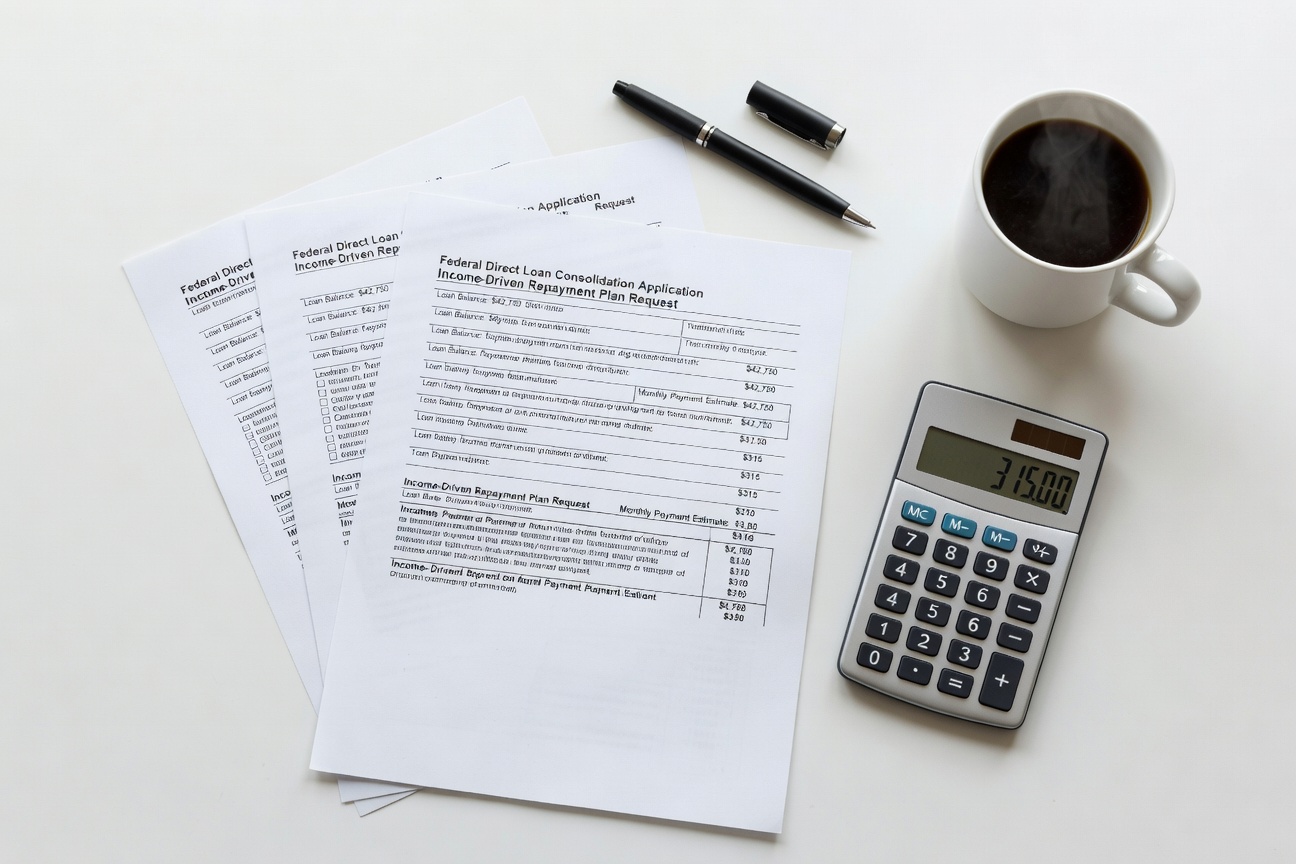
student loan repayment plan documents federal overview

⚡ Pro Tip

Recertify your income every year — but if your income drops mid-year (job loss, cut hours), you can request an immediate recalculation. Don’t wait for your annual recertification deadline. A $10,000 salary drop can translate to $100–$200 less per month in payments starting the next billing cycle.

The Four IDR Plans Compared

There are technically four active income-driven repayment plans right now, though one of them — ICR — is mostly irrelevant unless you have Parent PLUS loans. Here’s what you need to know about each:

SAVE (Saving on a Valuable Education) — This replaced the old REPAYE plan in 2023 and it’s the most generous plan the federal government has ever offered. Undergraduate loan payments are capped at 5% of discretionary income. If your balance is low relative to your original loan amount and you make your payments, you might see interest subsidies that prevent your balance from growing even if your payment doesn’t cover the full interest. It’s genuinely good policy.

PAYE (Pay As You Earn) — Caps payments at 10% of discretionary income with forgiveness after 20 years. The catch: you have to be a “new” borrower, meaning you had no outstanding federal loan balance before October 1, 2007, and received a Direct Loan after October 1, 2011. If you qualify, it’s a solid alternative to SAVE.

IBR (Income-Based Repayment) — The granddaddy of IDR plans, available in two flavors. New IBR (for borrowers who took out loans after July 1, 2014) caps payments at 10% with 20-year forgiveness. Old IBR caps at 15% with 25-year forgiveness. Both require you to demonstrate “partial financial hardship,” meaning your IDR payment would be lower than your standard payment.

ICR (Income-Contingent Repayment) — The oldest plan and the least attractive for most people, capping at 20% of discretionary income with 25-year forgiveness. Its main use case today is for Parent PLUS loan borrowers, who can consolidate into a Direct Consolidation Loan and then enroll in ICR.

Federal IDR Plan Comparison — 2026
Plan Payment % Forgiveness Eligibility Best For
SAVE 5–10% discretionary 20–25 years All Direct Loans Most borrowers, especially low-income
PAYE 10% discretionary 20 years New borrowers after Oct 2007 Borrowers seeking 20-year forgiveness
IBR (New) 10% discretionary 20 years New borrowers after Jul 2014 Partial financial hardship required
IBR (Old) 15% discretionary 25 years Pre-July 2014 borrowers Older borrowers without PAYE access
ICR 20% discretionary 25 years All Direct Loans incl. Parent PLUS Parent PLUS borrowers (after consolidation)
Best For Most People: SAVE plan — lowest payments, most flexible, available to virtually all Direct Loan borrowers

SAVE: The Newest — and Often Best — Option

I want to spend extra time on SAVE because it changed the math significantly for millions of borrowers when it launched. For undergraduate loans, your payment is 5% of discretionary income — half the 10% rate under PAYE and new IBR. If you borrowed for graduate school too, the blended rate depends on the proportion of undergrad vs. grad debt, but you’re still likely paying less than before.

The less-talked-about feature that might matter even more: the interest subsidy. Under SAVE, if your calculated monthly payment doesn’t cover the interest accruing on your loan, the government covers the difference. Your balance doesn’t grow. According to Federal Student Aid, this subsidy can save borrowers hundreds of dollars annually in capitalized interest.

One important note: SAVE has faced some legal challenges since its rollout, so check current status at StudentAid.gov before enrolling. The core structure remains intact as of early 2026, but specific provisions have been subject to court review.

Who Qualifies for IDR Plans?

Short answer: most federal student loan borrowers qualify for at least one IDR plan. For SAVE, PAYE, IBR, and ICR, you need Direct Loans — meaning loans issued directly by the federal government. If you have older FFEL loans from before 2010, they don’t automatically qualify, but you can consolidate them into a Direct Consolidation Loan to gain access. Private student loans are not eligible for any federal IDR plan.

There’s no income cap to qualify for IDR. You can be a high earner and still enroll — your payment will just be higher. Some high earners on IBR actually end up paying more than the standard 10-year payment, at which point the plan caps your payment at the standard amount. It’s a ceiling, not a penalty.

college graduates celebrating managing student loan repayment

Loan Forgiveness: The Light at the End of the Tunnel

Every IDR plan comes with a forgiveness component — the remaining balance after your repayment period is wiped out. That’s 20 years under SAVE (undergrad loans), PAYE, and new IBR. It’s 25 years under old IBR, ICR, and SAVE for graduate loans.

Here’s the honest truth most IDR articles skip: forgiven amounts are currently taxable as ordinary income under federal law. If your $80,000 balance gets forgiven, the IRS treats it like you earned an extra $80,000 that year. Plan for this. Stash money annually — even $500–$1,000 per year — into a savings account earmarked for the potential tax bill at forgiveness. Check IRS Topic 431 for the current rules.

Public Service Loan Forgiveness is different — forgiveness after 10 years in public service is tax-free. If you work in government, healthcare, education, or nonprofits, check your employer at the PSLF Help Tool.

⚡ Pro Tip

If you’re targeting Public Service Loan Forgiveness (PSLF), the SAVE plan is your best friend — it gives you the lowest possible payment, which means you’re maximizing the amount forgiven after 10 years. Don’t overpay toward forgiveness you’ll get anyway.

How to Enroll (Step-by-Step)

This is where most guides get vague. Here’s exactly how to do it: Log in to StudentAid.gov with your FSA ID. Go to “Manage Loans” then “Repayment Plans.” Use the IDR plan comparison tool to see projected payments for your actual loan data. For most borrowers, choose SAVE. Submit income documentation — you can link your IRS tax return directly or enter current income manually if it’s changed. Your servicer processes the application in 2–4 weeks. Keep making standard payments until confirmed.

For the full picture of how financial aid works from application to repayment, read our complete student financial aid primer. And if you’re weighing federal vs. private loans, our breakdown of government vs. private student loans covers the key differences.

Common IDR Mistakes That Cost Borrowers Thousands

Missing the annual recertification deadline is the big one — miss it and your servicer reverts you to a standard payment until you recertify. Set a calendar reminder 60 days before your deadline. Also: don’t consolidate loans without understanding that it resets your PSLF and IDR payment count. And plan for the tax bill at forgiveness — don’t let a 20-year journey end with an IRS surprise. The CFPB’s student loan tools are a great resource for understanding your rights throughout repayment. For marriage-specific implications, see how marriage affects student loan debt.

Your Next Steps

If you have federal student loans and you’re not on an IDR plan, go to StudentAid.gov today, run the IDR plan comparison, and see what your payment would look like under SAVE. It takes 10 minutes. The potential savings are enormous. And if you’re still in school or just starting out, understanding repayment before you borrow is one of the most valuable things you can do — start with our guide on how college savings plans are changing to think ahead about the full picture.


References

  1. Federal Student Aid (2026). “Income-Driven Repayment Plans.” studentaid.gov
  2. Federal Student Aid (2026). “SAVE Plan.” studentaid.gov
  3. Consumer Financial Protection Bureau (2025). “Student Loan Repayment Resources.” consumerfinance.gov
  4. Internal Revenue Service (2025). “Topic No. 431 — Canceled Debt.” irs.gov

Keep Reading

Want to go deeper on student loans and college finances?

Key Takeaways

  • Income-driven repayment (IDR) plans cap your monthly federal student loan payment at a percentage of your discretionary income — typically 5–20% — making them a lifeline if your salary doesn’t match your debt load.
  • There are four main IDR plans: SAVE, PAYE, IBR, and ICR — each with different eligibility rules, payment percentages, and forgiveness timelines.
  • After 10 to 25 years of qualifying payments, your remaining balance is forgiven — though forgiven amounts may be taxable income depending on the plan and current tax law.
  • Enrolling takes about 10 minutes on StudentAid.gov, but choosing the wrong plan can cost you thousands — this guide breaks down exactly how to pick the right one.

What Is Income-Driven Repayment, Really?

Let me be honest with you: when I first heard “income-driven repayment,” I thought it was one of those vague government terms that sounds helpful but delivers nothing. I was wrong. IDR plans are genuinely one of the most powerful tools in the federal student loan system — and most borrowers either don’t know they exist or have no idea which plan actually fits their situation.

Here’s the core idea: instead of paying a fixed amount based on how much you borrowed, you pay a percentage of what’s called your “discretionary income.” That’s roughly the gap between your adjusted gross income and 225% of the federal poverty level for your family size. The government’s logic is that you shouldn’t be forced to choose between rent and loan payments — your monthly bill should flex with your financial reality.

For someone earning $38,000 a year with $50,000 in student debt, a standard 10-year plan might hit them with $500+ per month. Under SAVE — the newest IDR plan — that same person might pay closer to $60–$90 per month. That’s not a rounding error. That’s the difference between making rent and not.

student loan repayment plan documents federal overview

⚡ Pro Tip

Recertify your income every year — but if your income drops mid-year (job loss, cut hours), you can request an immediate recalculation. Don’t wait for your annual recertification deadline. A $10,000 salary drop can translate to $100–$200 less per month in payments starting the next billing cycle.

The Four IDR Plans Compared

There are technically four active income-driven repayment plans right now, though one of them — ICR — is mostly irrelevant unless you have Parent PLUS loans. Here’s what you need to know about each:

SAVE (Saving on a Valuable Education) — This replaced the old REPAYE plan in 2023 and it’s the most generous plan the federal government has ever offered. Undergraduate loan payments are capped at 5% of discretionary income. If your balance is low relative to your original loan amount and you make your payments, you might see interest subsidies that prevent your balance from growing even if your payment doesn’t cover the full interest. It’s genuinely good policy.

PAYE (Pay As You Earn) — Caps payments at 10% of discretionary income with forgiveness after 20 years. The catch: you have to be a “new” borrower, meaning you had no outstanding federal loan balance before October 1, 2007, and received a Direct Loan after October 1, 2011. If you qualify, it’s a solid alternative to SAVE.

IBR (Income-Based Repayment) — The granddaddy of IDR plans, available in two flavors. New IBR (for borrowers who took out loans after July 1, 2014) caps payments at 10% with 20-year forgiveness. Old IBR caps at 15% with 25-year forgiveness. Both require you to demonstrate “partial financial hardship,” meaning your IDR payment would be lower than your standard payment.

ICR (Income-Contingent Repayment) — The oldest plan and the least attractive for most people, capping at 20% of discretionary income with 25-year forgiveness. Its main use case today is for Parent PLUS loan borrowers, who can consolidate into a Direct Consolidation Loan and then enroll in ICR.

Federal IDR Plan Comparison — 2026
Plan Payment % Forgiveness Eligibility Best For
SAVE 5–10% discretionary 20–25 years All Direct Loans Most borrowers, especially low-income
PAYE 10% discretionary 20 years New borrowers after Oct 2007 Borrowers seeking 20-year forgiveness
IBR (New) 10% discretionary 20 years New borrowers after Jul 2014 Partial financial hardship required
IBR (Old) 15% discretionary 25 years Pre-July 2014 borrowers Older borrowers without PAYE access
ICR 20% discretionary 25 years All Direct Loans incl. Parent PLUS Parent PLUS borrowers (after consolidation)
Best For Most People: SAVE plan — lowest payments, most flexible, available to virtually all Direct Loan borrowers

SAVE: The Newest — and Often Best — Option

I want to spend extra time on SAVE because it changed the math significantly for millions of borrowers when it launched. For undergraduate loans, your payment is 5% of discretionary income — half the 10% rate under PAYE and new IBR. If you borrowed for graduate school too, the blended rate depends on the proportion of undergrad vs. grad debt, but you’re still likely paying less than before.

The less-talked-about feature that might matter even more: the interest subsidy. Under SAVE, if your calculated monthly payment doesn’t cover the interest accruing on your loan, the government covers the difference. Your balance doesn’t grow. According to Federal Student Aid, this subsidy can save borrowers hundreds of dollars annually in capitalized interest.

One important note: SAVE has faced some legal challenges since its rollout, so check current status at StudentAid.gov before enrolling. The core structure remains intact as of early 2026, but specific provisions have been subject to court review.

Who Qualifies for IDR Plans?

Short answer: most federal student loan borrowers qualify for at least one IDR plan. For SAVE, PAYE, IBR, and ICR, you need Direct Loans — meaning loans issued directly by the federal government. If you have older FFEL loans from before 2010, they don’t automatically qualify, but you can consolidate them into a Direct Consolidation Loan to gain access. Private student loans are not eligible for any federal IDR plan.

There’s no income cap to qualify for IDR. You can be a high earner and still enroll — your payment will just be higher. Some high earners on IBR actually end up paying more than the standard 10-year payment, at which point the plan caps your payment at the standard amount. It’s a ceiling, not a penalty.

college graduates celebrating managing student loan repayment

Loan Forgiveness: The Light at the End of the Tunnel

Every IDR plan comes with a forgiveness component — the remaining balance after your repayment period is wiped out. That’s 20 years under SAVE (undergrad loans), PAYE, and new IBR. It’s 25 years under old IBR, ICR, and SAVE for graduate loans.

Here’s the honest truth most IDR articles skip: forgiven amounts are currently taxable as ordinary income under federal law. If your $80,000 balance gets forgiven, the IRS treats it like you earned an extra $80,000 that year. Plan for this. Stash money annually — even $500–$1,000 per year — into a savings account earmarked for the potential tax bill at forgiveness. Check IRS Topic 431 for the current rules.

Public Service Loan Forgiveness is different — forgiveness after 10 years in public service is tax-free. If you work in government, healthcare, education, or nonprofits, check your employer at the PSLF Help Tool.

⚡ Pro Tip

If you’re targeting Public Service Loan Forgiveness (PSLF), the SAVE plan is your best friend — it gives you the lowest possible payment, which means you’re maximizing the amount forgiven after 10 years. Don’t overpay toward forgiveness you’ll get anyway.

How to Enroll (Step-by-Step)

This is where most guides get vague. Here’s exactly how to do it: Log in to StudentAid.gov with your FSA ID. Go to “Manage Loans” then “Repayment Plans.” Use the IDR plan comparison tool to see projected payments for your actual loan data. For most borrowers, choose SAVE. Submit income documentation — you can link your IRS tax return directly or enter current income manually if it’s changed. Your servicer processes the application in 2–4 weeks. Keep making standard payments until confirmed.

For the full picture of how financial aid works from application to repayment, read our complete student financial aid primer. And if you’re weighing federal vs. private loans, our breakdown of government vs. private student loans covers the key differences.

Common IDR Mistakes That Cost Borrowers Thousands

Missing the annual recertification deadline is the big one — miss it and your servicer reverts you to a standard payment until you recertify. Set a calendar reminder 60 days before your deadline. Also: don’t consolidate loans without understanding that it resets your PSLF and IDR payment count. And plan for the tax bill at forgiveness — don’t let a 20-year journey end with an IRS surprise. The CFPB’s student loan tools are a great resource for understanding your rights throughout repayment. For marriage-specific implications, see how marriage affects student loan debt.

Your Next Steps

If you have federal student loans and you’re not on an IDR plan, go to StudentAid.gov today, run the IDR plan comparison, and see what your payment would look like under SAVE. It takes 10 minutes. The potential savings are enormous. And if you’re still in school or just starting out, understanding repayment before you borrow is one of the most valuable things you can do — start with our guide on how college savings plans are changing to think ahead about the full picture.


References

  1. Federal Student Aid (2026). “Income-Driven Repayment Plans.” studentaid.gov
  2. Federal Student Aid (2026). “SAVE Plan.” studentaid.gov
  3. Consumer Financial Protection Bureau (2025). “Student Loan Repayment Resources.” consumerfinance.gov
  4. Internal Revenue Service (2025). “Topic No. 431 — Canceled Debt.” irs.gov

Keep Reading

Want to go deeper on student loans and college finances?